streetstoriesems

The career archive of a NYC paramedic

Page 4 of 6

Advertising Billboard

Warning: there’s some profanity ahead. You can’t write about Liz without vulgarity being part of the dialog.

It had been a cold and stressful morning for Liz Moreno. An aggressive and violent woman, she had done far more ‘ass-kicking’ than usual that day. She had a black eye and several bruises. Her right arm was also severely painful. She tried to deaden the pain with alcohol, more alcohol than her usual allotment, but it had not done anything significant to help. If Liz felt the need to smack someone else today that disrespected or inconvenienced her, she would be at a disadvantage. Normally she was very quick to utilize the city’s ambulance resources but today she had some errands to do before she would spend more of her valuable time in a hospital. She also decided to turn over a new leaf by getting involved with a new religious philosophy.

Liz had never been one to embrace any religion or spiritually. Religion was for suckers she’d often say. With all it’s talk of being kind and good, it was just a way to keep people in their place. Turning the other cheek was for the weak and those who didn’t know how to fight. But her last stint in prison had taught her that churches and temples were good for more than just a free meal or a place to sleep. She had learned many things from another woman there, one who had fashioned her crucifix into a shank. Religious articles were less likely to be taken away. If they did, you could sue, claiming religious persecution, she had told her. Liz couldn’t believe she hadn’t known about this before. So much time had been wasted being unaffiliated.

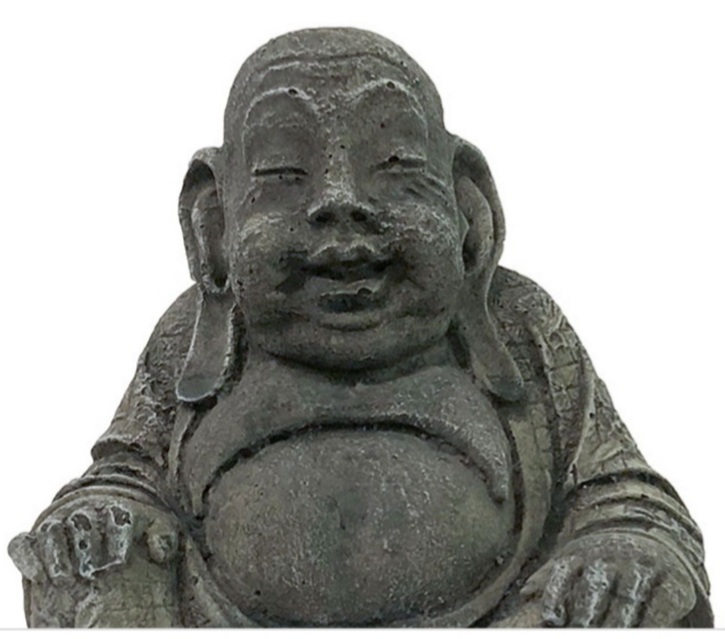
She went to a second-hand store with a crucifix in mind. She was hoping to fashion a far more superior weapon than the one her mentor in prison had shown her. But the secondhand shop was low on religious articles. It seemed people didn’t like to part with their weapon making materials. The trip had not been wasted, however. She was able to find a Buddha figure and it was made out of a nice heavy concrete type of stone. As she fished around in her bra for the cash necessary to make the purchase, the cashier remarked that her arm didn’t look too good and suggested that she get it checked out. Liz suggested she mind her own fucking business and paid for her new religious representative. But after walking out the store and trying to hold her heavy new acquisition with her damaged limb she had a change of heart and asked the woman to call 911 for her.

“Look! I found God!” she laughed as she got into the ambulance. The crew who was familiar with the perpetually angry woman were a bit leery of this rare display of joy and the newfound love for heavy concrete objects in the hands of a perpetually angry woman. They splinted up her arm and took her to the hospital where she repeatedly told everyone with glee that she had “found God, his name is Buddha.”

Sometime after getting out of the hospital and enjoying her new prescription pain medications, an ambulance was again called for her when she was found unresponsive and barely breathing. “Where’s my Buddha?” she quickly asked when she awoke from her opioid reversal, via Narcan (naloxone). Her new spiritually had already become ingrained into her psyche.

The ambulance people had destroyed her high and she felt justified for lashing out at them. Even thought she always berated them for various perceived infractions this one was very different. She didn’t want to hear anything about ‘barely breathing’. Her prescription was LEGAL. They couldn’t do anything about it. Sure she had taken far more than the bottle instructed but it wasn’t the point. A doctor had given her these medications. She hadn’t gotten high off of something purchased from a man named Angel on the corner of Decatur and Wyckoff. She had done nothing wrong and didn’t deserve to be punished for it with Narcan.

As she argued with the crew she was comforted in knowing she now had two weapons-her concrete Buddha and her nifty new cast. “Look,” she showed the paramedics. “It’s like I got concrete stone on my arm too!”

“Nice little advertising billboard, you’ve got there,” said the paramedic.

What was he talking about? She looked to where he was looking. It took some contortions but she could tell something was written on her brand new cast. She studied it with her head bent at an uncomfortable angle.

“BLOW JOBS 75 CENTS – broken arm sale.”

It had been written in large lettering with a thick black marker. And the words faced outwards, like advertising, just as the man had said. You could practically see it from three blocks away. “What? The fuck? Man!” she screamed. Her cast had been on her arm less than 24 hours and someone had already vandalized it.

“When you’re passed out on Oxy worse things can happen,” said the medic, trying to console an inconsolable Liz.

“Shut the fuck up!” she told him. She was going to raise up her concrete Buddha as a warning but she couldn’t grab it in time. The crew had taken it away, out of her reach.

“You’ll get it back at the hospital,” they told her.

Didn’t they know it was a religious article? She was allowed to hold it. Her prison mentor had told her all about it.

“You know, there are some who say that Buddhism isn’t a religion. There’s no deity. It’s really more of a spiritual philosophy. I don’t know if it fits the same parameters,” one of the medics told her.

“What was she saying? What’s a parameter? Can I still sue if they take away a spiritual philosophy figure made out of heavy stone? They must just be fucking with me. If only I had my Buddha, I’d show them,” she thought. But there were other things to worry about. Who had defaced her cast? Who was she last with? That person was going to feel the full, literal weight of her spiritual philosopher.

Liz spent a few hours at the hospital, mostly being lectured about the right way to take pain medication. When she asked for more they gave her Tylenol. Tylenol! Didn’t they know that’s not the same?

The same paramedic crew found Liz a few days later. Someone had called for her when they saw her bleeding and laying on a street corner. Those paramedics thought they were going to her hit with the Narcan again, she laughed, but the joke was on them. She was just drunk. A battered and bruised Liz made her way to the ambulance anyway. At least at the hospital she could get some rest.

The crew had never seen Liz so battle-worn and that was saying something. She looked tired and had cuts and abrasions everywhere. Another tooth was gone from the already sparse lineup and one of her eyes was swollen. They asked her what happened. She showed them her cast. The “BLOW JOBS 75 CENTS- broken arm sale” had been mildly scribbled over with a blue ball point pen. You couldn’t even see that it had been crossed out unless you looked closely.

“I’ve never beat up so many people in my entire life,” she told them. “I got all kinds of mens coming over day and night with their one dollar bills, asking me for change. Fuck them! Who charges 75 cents for a blow job? I do a blow job I want a bag of tar or some blow! You keep your fucking dollar bills to yourself. Fucking assholes. They be throwing quarters at me! Quarters! You believe that? Buddha cracked a couple of skulls, I tell you. That thing is heavy but it do the job. Last thing they worry about now is their pee-pee.”

Buddha too, had gone through some physical changes. A few chips and scratches seemed to under line the story Liz told of her recent encounters. With all the violent karma she had been dishing out lately, Liz’s new religion hadn’t provided her with much peace.
And Somewhere Along the Way, She Was Shot

This is one of those “worst” jobs.

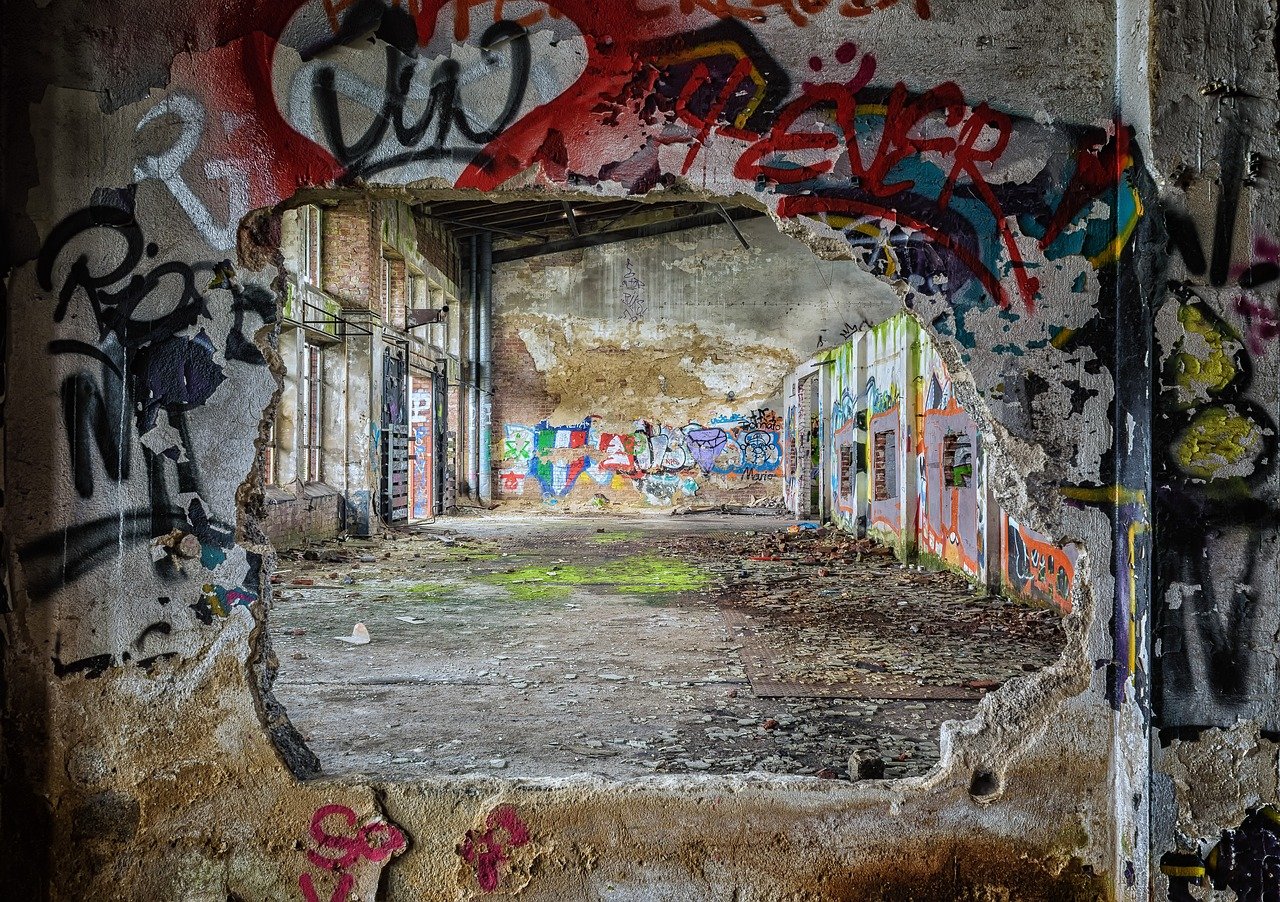
Trying to find the address the dispatcher sent us to had us searching a desolate, poorly illuminated street. Most of the industrial buildings appeared to have been abandoned but the presence of new gates and security cameras indicated some of them probably were not. It was difficult to locate a number on most of these buildings even using our fancy vehicular spotlight. We asked the dispatcher to verify the address and try the callback for a better location. Our “Unconscious” in bed person didn’t seem to live here, no one did. The area had at least ten more years to go before the first loft apartments would start gentrifying the neighborhood.

Finally a man appeared, seemingly out of nowhere. He was thin, about 50ish, and his stubble was mostly grey. He had become very annoyed by the 911 people calling back over and over again to ask about a location that he felt should have been obvious to find. We told him we would follow him.

He led us down a short alley to the padlocked side entrance of one of the buildings that was, actually, abandoned. There was no way we would have found this patient without a guide. The entire area seemed eerily bleak and unusually quiet. Yet despite our unease, we still followed the strange man for some reason.

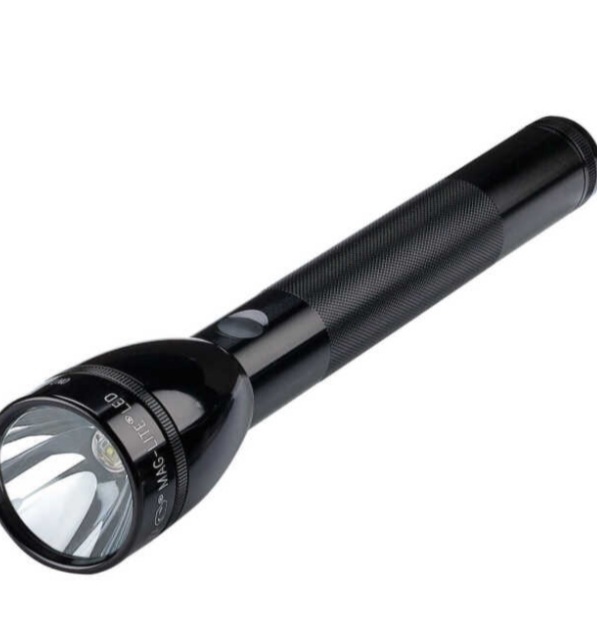
The man showed us a large hole in the wall that had once been a window and pointed to where the patient was. We shined our two flashlights into the darkness. A large figure lay on what could hardly be considered a “bed”. It had possibly once been a mattress but now it had completely become one with whatever the floor was.

“Is this the only way in?” we asked. The man nodded. We looked at each other with a smile as we shined our flashlights around the entire space contained behind the ‘window’. Many rodents scattered. The area was filled with garbage, so much garbage. There were extra piles of garbage on top of the floor which was covered in garbage. We had more than a few safety concerns. We looked at the ceiling to see if it would hold for the duration of time we would possibly be in there for. It’s not like we know anything about building construction but I thought it would hold. There weren’t any other people around, except for the inconvenienced man and the individual on the other side of the room.

My partner nodded over to the person on the ‘mattress’. “What’s going on with that one over there?” he asked.

“I can’t wake her up!” he said. The man went on to explain that he had found the woman, who he was familiar with and called “Flo”, on what he called his bed. He wasn’t really sure what her real name was. They had had “relations” and then afterwards they shared some drugs and took a nap. Now he wanted her to leave. This was his hangout and she was only a visitor, in his telling of it. He tried rousing her but she never responded.

One after another, we athletically hopped up to sit on the open window ledge. We swung our legs around to the other side of the opening and shined our lights below us before hopping down. Every step we took was done carefully as we made our way over to the woman. The floor was littered with drug paraphernalia and the air smelled of death and every kind of rot imaginable.

The woman was completely naked. She was initially on her side and when we turned her over we discovered that she was pregnant. My partner and I exchanged the first of many knowing glances toward each other, glances that we could easily interpret despite the darkness of this filthy area.

Her pupils were pinpoint and her breathing was slow and irregular. “How much did she have?” I asked her companion.

The man had no idea. It turned out that when he said they had ‘shared’ drugs what he really meant was that he had shared her drugs with himself. Whatever she had taken, she had taken it before he found her. It became clear he had had “relations” with the woman while she was in this unconscious state. I was even more disgusted.

We asked him where her clothes were and he said he didn’t know. He had found her like that and taken it as an invitation. He had found a needle in her foot and without knowing what was in it, used what was left on himself. There was nothing unusual about any of this, in his world. He had no idea how long ago that was because, as he told us, he doesn’t wear a watch. He was just a free spirit.

We hit the woman with some naloxone (Narcan) and gave her oxygen in the hope it would reverse whatever chemicals she had shot into her foot. But even though her breathing got a little better it did nothing to change her unconscious status. We started ventilating her with our BVM (bag-valve-mask) and called for EMT back up to assist us.

“I’m not really into working her up in this hell hole,” my partner said to me. The man became somewhat confused and visibly insulted. What hell hole? This spacious warehouse loft that smells of death? Why, in a decade or so hipsters will be paying thousands of dollars for this place that he now lives in for free.

But we opened the drug bag to see what we could accomplish until the BLS got there to help us get her out. We needed multiple little pads of alcohol to swab her arms clean while searching for a vein to stick, which was a monumental endeavor since most of them had been destroyed from years of injecting chemicals into them with unsterilized needles. I’m going to pat ourselves on the back for the success in getting this difficult IV in the darkness, illuminated only by shaky flashlights that don’t have the LED capability they have now, in modern times.

My low lumens flashlight is the EMS version of I walked 5 miles to school in the snow.

While running the flashlight up and down her limbs in search of a usable vein we noted an injury to her upper left shoulder. It looked like a bullet hole. The man knew nothing about it and was as surprised as we were.

We heard the sirens of our back up and we sent the man out to show them how to find us. In the meantime we gave “Flo” more naloxone, to no avail. This certainly wasn’t just an overdose. Whatever she had taken had also been injected into the arm of our guide and it didn’t seem to be affecting him as profoundly, although she certainly could have taken significantly more.

As our EMTs made their way through the ‘window’ we yelled across the abandoned room for them to be careful, as if they couldn’t see for themselves the danger inside. I loved them for having brought a hospital sheet with them, as so many don’t. It would be a tremendous help in moving her since she had no clothes to grab on to. The crew moved right to the top of my most favorite EMT list when they noted our nice clean IV with admiration.

“Where’s her rapist?” I asked.

“Oh, I don’t know. He pointed to where you guys were and he took off and left,” one of them told us. He looked at the patient. “Wait, is she pregnant?”

“Yes, and it looks like she’s been shot as well,” said my partner. This was like one of the ‘mega-codes’ we train on at the academy, except they usually just stick to either trauma OR medical, not both at the same time.

As we balanced ourselves on top of piles of garbage we managed to get our patient onto a carrying device so we could get her out. We then slowly made our way over to the hole in the wall, stepping over crack pipes and needles, every kind of trash, and the long dead corpses of rodents who did not survive. We luckily made it without falling. We then carefully passed our patient through the hole in the wall onto an awaiting stretcher.

I was never so grateful to make it to the clean, controlled environment of our ambulance. We could finally make a better assessment of our patient. But taking a good look at our patient made me incredibly sad. This woman’s body told the story of a hard and rough life. What kind of messed up circumstances had this woman lived under, what stories could she tell? She was a tall woman who looked to be in her forties, although that was purely a guess. She had scars everywhere. There were track marks where I never thought there would be track marks. She was missing most of her teeth and her nails were either really long or gone altogether.

Her gunshot wound had a clear entrance and exit wound but did not seem to be causing any significant bleeding. We would probably be going to a trauma center even though the gunshot was the least of her issues at the moment. Her vital signs remained fairly stable. Since we didn’t know the onset of the symptoms, of what appeared to be a stroke, going to a ‘stroke center’ would not have been useful. There is a definite timeline that stroke procedures require and we had no way of knowing when everything started.

We intubated her and hooked her up to our monitor. She seemed to be slightly responsive to painful stimuli, which was a good step in the right direction.

“Umm, guys,” said one of the EMT’s tugging at my shirt. “I think the baby might be coming.” He was noting what appeared to be water breakage on a particular area of the sheet covering her.

I’m sure we all looked similarly terrified. An OB kit was pulled from the cabinet and more sheets were utilized, just in case.

What kind of notification would we be giving?

We tried to give the basics to prepare the trauma center without being too long winded. If we told the whole story we would be at the hospital by the time we were finished. We tried to downplay the gunshot but that’s all you have to hear for it to make it to the top of the interest hierarchy. We were also requesting that an incubator be standing by.

It was mayhem inside the hospital. Thanks to our notification dozens of trauma related people were standing by along with others not sure why they had been summoned for a gunshot notification. I guess when you hear that a patient has a gunshot wound all the other information gets drowned out. You could tell they were gearing up to get mad about something. And nobody listens to the whole synopsis.

There were so many people throwing out questions at us from all directions. We tried very hard to tell our patient’s story in one cohesive storyline but it kept getting interrupted by questions we had no answers to. Didn’t you give naloxone? Why isn’t she breathing on her own? How many months along was she? How long ago did the gunshot happen? Where are the police? What kind of medical history does she have? What did she take? Did you give the naloxone? Why did you take off all her clothes? Does she take any medications? What’s that smell? Is this her first pregnancy? Did the father come along? Is there any weakness on a particular side? Did she say anything? What kind of gun was it? She’s obviously on something, why didn’t you give naloxone?…

This seemed to be a hospital far too comfortable with having everything taken care of beforehand. Had they never gotten a patient before that didn’t arrive with a complete medical history? They continued with their demands for answers we didn’t have and they never stopped bringing up naloxone, as if we hadn’t already given her our entire protocols worth. I was starting to get annoyed at all of them in their nice clean environment. They didn’t have to step over crackpipes and rotting fast food to get to their patient. They didn’t have to contort their body into a small width of space between the captains chair and the back of the stretcher in order to insert a tube down the patient’s throat. They didn’t have to hold their breath for minutes at a time to deal with the overwhelming stench of different things dying and decaying at different rates around them . I doubt they could have gotten an IV the way we had. Was anyone even noting the stroke that we had given as the first priority of our notification?

The EMTs and I were feeling a little overwhelmed when my partner used his charm and wit to put some perspective into the hoard of questioners and complainers.

“Look,” he yelled, surrounded by the angry faces of a crowd demanding answers. “She was found in a garbage dump. The only person with her told us that he fucked her and then stole her needle and ran off somewhere. That’s all the information we were given, now it’s all the information you have. And somewhere along the way the woman was shot.”

We brought another trauma patient to that hospital a few hours later. It was somewhat insulting and also somewhat useful that no one seemed to remember us at all. It was a different nurse doing triage and she apologized for a delay in finding us a stretcher. “You’re not going to believe this but some EMS crew brought in this lady who having a stroke, and she was shot too. AND she had a baby in the ER! Can you believe it? They delivered a baby in the ER!”

“That IS crazy!” I replied.

“They were going out of their minds around here when I came in. And the OB floor took their time sending down an obstetrician so an ER doctor had to do it. They were lucky it wasn’t a C-section.”

I found out that is extremely rare for comatose women to give birth unassisted but our patient had, for the most part. No one had to tell her to push and no one had to do an epidural. She delivered a small, underweight baby girl who had a long road ahead of medical treatments.

The incompetent EMS people who brought her in had not provided any of the necessary information, such as the number of pregnancies she had previously, when her due date was, where she was getting her prenatal care, none of it.

“I guess you had to ask the patient herself, then,” I surmised.

“How could we do that?” she looked at me like I was crazy. “The woman was unconscious. She couldn’t tell us anything.”

The Dungeon at the Luxury Hotel

When an extremely expensive, world renowned hotel in Manhattan would call us they used an address that led to a side entrance utilized by the laundry service and garbage pick-up. Going through this entrance took you down a dark, putrid tunnel where the underbelly of the hotel operated. Large bins overflowed with laundry on one side while several small dumpsters lined the other. At the end of the long hallway, bright glaring florescent lighting lit up large areas where hotel workers dressed in white scrub type uniforms rushed around carrying plastic bags or trays or boxes. There was always hurried activity going on whether we came during the day or in the middle of the night. The employees were always friendly and quickly got out of our way despite their seemingly urgent mission. It was with these employees we would wait for the service elevator. As an old hotel it only had one.

Sometimes a well-dressed representative from the hotel would meet us at the doorway of the dirty tunnel and take us upstairs with him to the room where the guest was. When there was no representative waiting we knew the call was for an employee and we were on our own.

We had learned of the alternative address early on, as they called fairly frequently. The Dungeon Entrance, is what we called it. One time we tried disregarding the separate address and attempted to go through the front, main entrance but we had barely made it in to the lobby when we were quickly intercepted by a small security detail wearing earpieces connected to little squiggly wires. It wouldn’t be a good look if it appeared guests weren’t well 100% of the time they stayed at this exclusive address. Those who fell ill were dispatched to the Dungeon, presumably to let the well heeled clients know they had lost their high end status for the time being.

One day the representative met us outside, moving the orange cones he had set up to reserve our spot. Was this their new policy, we wondered? No, we would find out later. Just this one time for someone they wanted to impress. As we took out our equipment from the side door the man told us we would need our stretcher. The patient had abdominal pains, he told, and couldn’t sit up.

The assistant hotel manager looked slightly uncomfortable leading us through the dirty tunnel. He did his best to pretend he didn’t smell anything foul. He looked more ridiculous continuing the charade in the service elevator where the confined space made the odor much more concentrated. The service elevator was unusually small, as most service elevators are considerably larger than regular elevators, in my limited experience. It was a bit challenging getting our stretcher to fit. Our hotel rep was forced to brush the expensive material of his specially designed blazer against the steel wall several times and I imagined him to be making a mental note of burning it when the call was over.

We went up to one of the top floors and were guided into a suite with enormous double doors made of thick wood. The lights had been dimmed and the curtains drawn but I could still tell the room was larger than my apartment at the time. He must have had a spectacular view of the city from this vantage point as well. I recognized our patient, despite the challenges of limited lighting. I had read some of his books and liked them. I was also a fan of his ex-wife, who had been a famous actress.

“Hello Mr. Andrews,” I said. “How can we help you?”

“So you know who I am?” he said, somewhat cheerfully. “I guess the dim lighting gave it away.”

His face lightened up when I told him what my favorite book of his was, which was not one of the more popular ones. He told me it was one of his better ones but hadn’t been received well by critics who said it was too ‘dark’.

“That’s the first time I’ve seen him smile since we’ve been here,” remarked a man who was staying with the patient. He looked over to the manager as if to imply that there was more going on than Mr. Andrews’ illness.

The patient started moaning in pain again and we went to work checking him out. He told us that he thinks he had eaten something ‘bad’.

“He had room service,” chimed in the author’s friend. “From the hotel restaurant.” The hotel representative continued with his pained look as well.

We went through his litany of signs and symptoms, took his history and checked his vitals and then tried to gently move him onto our stretcher. When he was fairly comfortable we exited the suite and headed towards the service elevator. When we got to it our world famous novelist vocalized what we had been thinking.

“Why are we using the trash elevators?” He looked at us as if it had been our idea.

“Hotel policy, sir,” said my partner. “Wait until you smell the basement.”

“Sir,” said the hotel rep, authoritatively, “We do it for privacy concerns.” He totally ignored how the separate entrance led to a different experience.

“Whose privacy? Mine?” he asked. “Or yours. Because we all know I don’t give a damn. This is ridiculous. Take me to the regular elevators.”

“They have us parked around the block,” we told him.

“You never know who has a camera aimed at our lobby,” the hotel manager tried to explain. “The hotel takes the privacy of our privileged guests very seriously and…”

“That’s a lot of bullshit and you know it,” he said. “This young lady is the first person who knew who I was without bringing up my wife. Thank you for that, by the way.”

The complaints continued as we made our way down the elevator and all the way to the ambulance. He promised to continue to complain to the owners of the hotel.

But the next time we came nothing had changed except the representatives blazer. He remembered us from the writer call and confided in us, as we were all members of the underclasses and he had put him the man down at our level, that the complaints were probably burned as swiftly as his soiled blazer had been. To the rep, the man was just someone who had jotted a few lines and ridden on the coattails of his ex wife anyway. “She was a darling of this hotel,” he told us. “The parties, the events, she gave us so much publicity when she walked through those doors.” We assumed he meant the hotel lobby doors where all the cameras were aimed.

Broken Hearts, Broken Doors

We were in the hallway of a housing project, lined up behind apartment 5G, awaiting a callback from the dispatcher. The middle aged neighbor in apartment 5K, which was almost directly across from 5G, opened her door and with wide eyes asked a question, “Is everything alright?”

One of the EMTs answered, “We have an emergency. Would you happen to have a key, or know who would? Your neighbor may be in trouble but we can’t get in.”

The 5K neighbor was apologetic. “I’m sorry, no. She doesn’t really talk to me. She’s a somewhat hateful woman, honestly. I’d go as far as to call her a bitch, if I weren’t raised better. But of course, I don’t wish her any harm. I hope you can get in to help her. I don’t know of anyone who she would trust with a key. I guess that means you’re going to have to break the door down, right? Isn’t that what you do?”

5K was correct and well versed in our procedures. For serious emergencies we would have to gain access when efforts to contact the patient didn’t work out. In this case, the 911 caller had stated she was feeling dizzy and thought she’d pass out. We told our dispatcher that the lobby door had been propped open but there was no answer at the apartment door. The whole procedure takes a long time because we have to wait for the dispatcher to make a few efforts to get in touch with the caller and review the dispatch information for any other way to contact the patient. They do this in between giving out active emergency calls to other units which is truly a nonstop endeavor. When there are no other options left we get the firemen to come and break down the door. Then we would also need PD to secure the apartment until the door can be fixed.

In this case, fire came and destroyed the two locks that held the door closed. When we all went into the apartment there was no patient anywhere. Just another false alarm, right?

About two weeks later we returned again. This time the caller had said she was a friend of the resident and had been on the phone with her when she suddenly stopped talking after complaining of a headache and dizziness. The person feared her friend had passed out…or worse. The dispatcher was able to get in touch with the caller who continued to be frantically worried about her friend but had no way to access the apartment.

Once again the firemen came, broke down two shiny, brand new locks, and once again the apartment was empty. But this time, as we were about to leave, a woman arrived home, surprised to find her apartment full of first responders from several agencies.

“Not again!” she said. She seemed be in her early 40’s and was well dressed with long nails and a trendy hairstyle. We told her the circumstances and she was furious. “Someone is doing this to me out of pure hatred and jealousy.” She said this while giving a big long stare in the direction of apartment 5K. When the police asked her who would have a vendetta against her she mentioned her neighbor specifically. She said that the resident in 5K was jealous of her because her boyfriend had appreciated her style and good looks. She can’t help being more attractive, far more attractive than the woman in 5K, she said. The other woman was just plain jealous even though 5G had done nothing to lead him on in any way. The poor man was probably just tired of being with that awful woman.

“She’s just one of those crazy, jealous girlfriends. Totally irrational, probably has self-esteem issues,” she suggested. She admitted that she had no proof. But there was no one else she could think of who didn’t like her. She asked if the police could trace the phone numbers. They promised to look into it.

As we walked out the resident in 5K asked us to confirm what she had overheard. “Did she actually say I was just a crazy, jealous girlfriend?! That whore!”

We, of course, couldn’t confirm anything but it had obviously been said rhetorically. Accusations of faked 911 calls didn’t bother her but being jealous of that ho? That was too much.

Another door breaking episode followed three weeks later. The woman hadn’t been home but arrived while we were there. As we were milling around there was talk among the police about how the apartment was running the risk of being labeled a “chronic call address” which would make it less likely to be broken into, even if the actual resident placed a real call to 911 in the future. They also noted that the investigations into the origin of the 911 calls had been traced to cheap ‘burner’ phones that can be easily purchased at convenience stores. This piqued the interest of the woman who was being harassed.

Our next phone call to the building was for apartment 5K. I suspected another ‘burner’ phone had been purchased to make this call requesting assistance for a “poor old woman in the late stages of syphilis”. The caller suggested that the patient was “going crazy with dementia” and “losing her mind, very disoriented”. The caller had described the patient as “looking very old for her age” and seeing lots of men come and go from her apartment.

When we showed up at 5K the woman was home. She shook her head while telling us that her neighbor in 5G was very childish and should be arrested for making fake 911 calls. “That kind of thing could endanger the public!” she said with great concern.

I noted that 5G always seemed to be out and 5K always seemed to be home. As we left I told my partner that I felt that 5G should be very leery of 5K since she seemed to have far more time on her hands.

We ran into the same cops who came on these jobs on other calls and they told us that they had received several non-medical calls to the two apartments as well. Callers claimed criminal activity was going on which were also unfounded. They were growing tired of the feud and hoped one of them would move.

Things began to escalate when a third apartment needed to be broken into: 10B. The caller had described a distraught male who was indicating that he was going to kill himself because his “saint of a girlfriend had left him”. The caller stated that his new “whore girlfriend” made him “very sad” and he had told her he was thinking of hanging himself. No one was found in that apartment either. It seemed fairly obvious to my partner and I that 10B was somehow related to the fight going on with 5G and 5K given the overly descriptive details provided by the caller. The police agreed and two of the went down to 5G and 5K to see if they could provide any assistance. 5K seemed like one of those nosy busybodies that most buildings have, the ones that keep tabs on all the neighbors. I was sure she’d provide some valuable insight.

The cops provided us with some juicy new developments to the ongoing saga. The man who lived in 10B had dated 5K but was now preparing to move in with 5G. The cops were rubbing their foreheads as if they had developed massive migraines. Things were only going to get worse.

The boyfriend had confirmed that 5K hated 5G and couldn’t understand why she had such anger towards his new, wonderful girlfriend. He had no doubt that she was behind the packages of excrement that poor 5G had received and the sexual devices that kept getting delivered to her job. The man who lived in 10B had said that he was now finding scratches on his car and had discovered that for several days he had been driving around with large plastic dildos suction cupped to his front and rear bumpers. As someone who did deliveries as part of his job, he was furious that 5G was interfering with his income.

For a while things went silent with that building, for us anyway. Sometimes we would go on calls nearby and wonder what happened to the love triangle. I guessed that 10B and 5G would have made amateurish efforts to exact revenge on the more creative 5K and she would have retaliated tenfold, having been the thwarted lover and also having so much free time. But their efforts no longer involved calling 911 so we could only speculate.

But about a year later we were sent back to the building for the boyfriend who was no longer living in 10B. He was now shacked up in 14A with another woman. Were there no single ladies living in other buildings for him to date? No wonder the man thought he was having a heart attack living under these stressful conditions where at any moment he could run into his ex’s.

His heart was running a little erratically, producing extra complexes. It probably had nothing to do with his love life but he told us those women on the fifth floor were crazy and had caused him a great deal of stress. If they had joined forced and doubled down their efforts on him alone it was possible. But I doubted those two women had settled their differences that far. As we left I glanced at the new woman in his life. I wondered how she had come into his life and if she knew the other women from more than just her boyfriend’s stories of harassment. I assumed if she was she was also getting strange packages and having sexual devices affixed to her vehicle.

The Cheese Sandwich

EMTs and paramedics are required to attend many training classes, exercises, and updates. Every few months, we receive orders sent to our stations notifying us that we have been scheduled to spend one of our days off at the training academy, usually for a full eight hour shift of overtime. It gives us the chance to meet old coworkers who may have transferred, meet others who work in different parts of the city, and sit side by side with colleagues of various ranks who are participating for the same reasons.

I was lucky to attend one of these days of training with one of the mentors I tried to model myself after when I became a lieutenant. So on that day, in addition to learning about whatever topic was being talked about, my favorite supervisor taught me the equalizing power of the ‘cheese sandwich’.

Possible recipients of the culinary delight usually make themselves known early in the shift, often when everyone is milling about, seeing who else they will be spending the day with. When we walked in, my mentor picked him out right away.

There was another lieutenant in our class who I knew was disliked by many EMTs and paramedics. As it usually turned out, those same people are also unpopular with others within their own rank as well. This lieutenant was complaining as we walked in, of being inconvenienced because he had to come here, overlooking, I suppose, that all of us were here on our day off when we could be doing other things. He bragged about how far he had to drive, since he lived in an exclusive Long Island zip code. The rest of us wouldn’t understand what that was like, obviously, because we all lived in the slums of NYC, but apparently, it was a long drive, a very long drive. And there was traffic, lots of it. Traffic, however, didn’t seem to be of concern later as he continued to lengthen our lectures by interjecting his ‘unique’ work stories, not for our entertainment, but to let us all know about the hardships he’s had to endure. He didn’t need this training day, obviously. He had more than enough experience. We should be learning from him.

Most of the time, training days follow a predictable pattern. At the beginning of the day, the instructor will come in, give a brief outline of what is on the schedule, and, before starting, circulate a lunch list. Our academy is located in Fort Totten and sometimes we do training drills on Randall’s Island. Both locations are extremely isolated and with only a half-hour for meal, it would be difficult to leave, get food, and come back in time to eat it. So one of the options they came up with was to send around a menu from a deli they have an arrangement with and place an order to be delivered in time for the meal. The deli they use is very popular and most people place an order.

The menu and the order list got passed around the room during the first lecture. When it made its way to us sitting in the back, we had an opportunity to review what the others were anticipating for lunch, and make changes as needed. Our inconvenienced complainer of the morning saw his “Roast Beef Sandwich with Mayo” swapped out for “One Slice of Muenster Cheese on White Bread, please”.

After it was delivered, the class got to enjoy the ramblings of the loudest complainer of the afternoon as well, as he was cranky from having nothing but a slice of Muenster cheese on white bread for lunch (peasant food). He was about to complain to the deli but on the order sheet, it was clearly written that he had received exactly what was specified.

“Someone’s a big joker, I see.” he told everyone, proving once again that he was the smartest man in the room. He sought solidarity with me, after reviewing the whole list, saying “You and I, someone’s got it out for us.”

“Um, I actually did order a cheese sandwich,” I told him quietly.

He viewed me with suspicion. Why would someone CHOOSE a cheese sandwich when there was roast beef on the menu? I was vegetarian at the time and he most likely considered me a suspect. Now that I’ve given up dairy as well I would have been way more annoying, of course. [And since I I’ve opened up this opportunity (***warning***) to be truly, stereotypically annoying I will add that as a connoisseur of the cheese sandwich, even though mine are slightly less enjoyable these days, it needs to be noted that meatless sandwiches are lovely in their own right. There are all kinds of substitutes out there that are great too, but seriously, salad on a bread is a wonderful and creative way to eat healthier. I’ve even provided a few links at the end.]

OK, we can get back to vengeance now…

Another variation that has been done involved calling the deli while they were making the orders and complaining in advance. When you call them you pretend to be the person who ordered #12. You tell them you have ordered the lunch list sandwich many times and they have yet to provide you with acceptable sustenance. You don’t have much optimism but you hope that this time they might possibly provide more than the few strands of shredded lettuce that you’ve become accustomed to getting. The bread will probably also be terrible and well. The cheese, there’s never enough cheese but what choice do you have? You’re stuck at training, you expect to be disappointed. Perhaps next time a more suitable vendor can be contracted. This all practically guarantees a nice sandwich on old bread that would have otherwise been tossed. Your recipient will receive far more of the necessary greens he is probably low on and it should also, most likely, come with an extra helping of saliva.

One accidental variation I have been told of, involved someone ordering a ‘cheese sandwich’ for someone else and then feeling bad when that sandwich was delivered. They offered their own sandwich to the recipient as consolation and became seen as a huge hero, getting kudos from many who witnessed the act of selflessness. There are probably many other variations out there and it is my hope that the younger generation will build on what has been created.

The ‘cheese sandwich’ eventually evolved to become an all-encompassing term that implied necessary vengeance and applied karma when it was said with relish. When the person you dislike who has been jumping through all kinds of hoops to get promoted suddenly gets denied, it can be said that he was handed a ‘cheese sandwich’ by management. But the term “cheese sandwich’ could also mean that you’ve gotten screwed over when said with disappointment or anger. If a person gets in trouble for something everyone does, like when they ask the dispatcher for a 10-100, which considered a bathroom break, but get caught buying food instead, the infraction paper that they receive from our enforcement arm is referred to as a “cheese sandwich.” Some of us have evolved toward using the ‘cheese sandwich’ metaphorical term in non-work environments, leading to either an elaborate explanation, or even better, a confused conversant who isn’t sure whether they want to know. Metaphorical or real, I think we can all agree that most cheese sandwiches should be avoided.

************

Even though this story wasn’t really about lunch itself, here are a few links for some great plant based lunch options and a video on why it’s best if a true cheese sandwich is avoided as well.

https://namelymarly.com/best-vegan-sandwiches/

A Foul Mouthed Nun

Before I went to a Catholic high school I knew very little about nuns except for the stereotypical things: they wear habits, they pray all day, and they like to beat up little kids who don’t do their homework. I had many Catholic friends growing up and I never heard any of them dispute these accepted norms.

My dad was a former Catholic who had left his religion for various ideological reasons, but still felt they would provide an excellent education, which is how I ended up at an all-girls high school taught by many nuns, most of whom didn’t wear habits and didn’t beat us up for not doing homework (the stern look worked much better anyway). But it wasn’t until I had a nun as a patient that I learned there were also nuns into weight-lifting and some of them even cursed like sailors.

Sister Theresa Agnes had been visiting NYC with another sister from a parish upstate where they were both stationed, if that’s the correct term. The two women looked as if they could be actual sisters, with similar features and mannerisms.

They had been running around all morning going to the more obscure city landmarks that most tourists don’t see. They were particularly interested in the borough of Brooklyn.

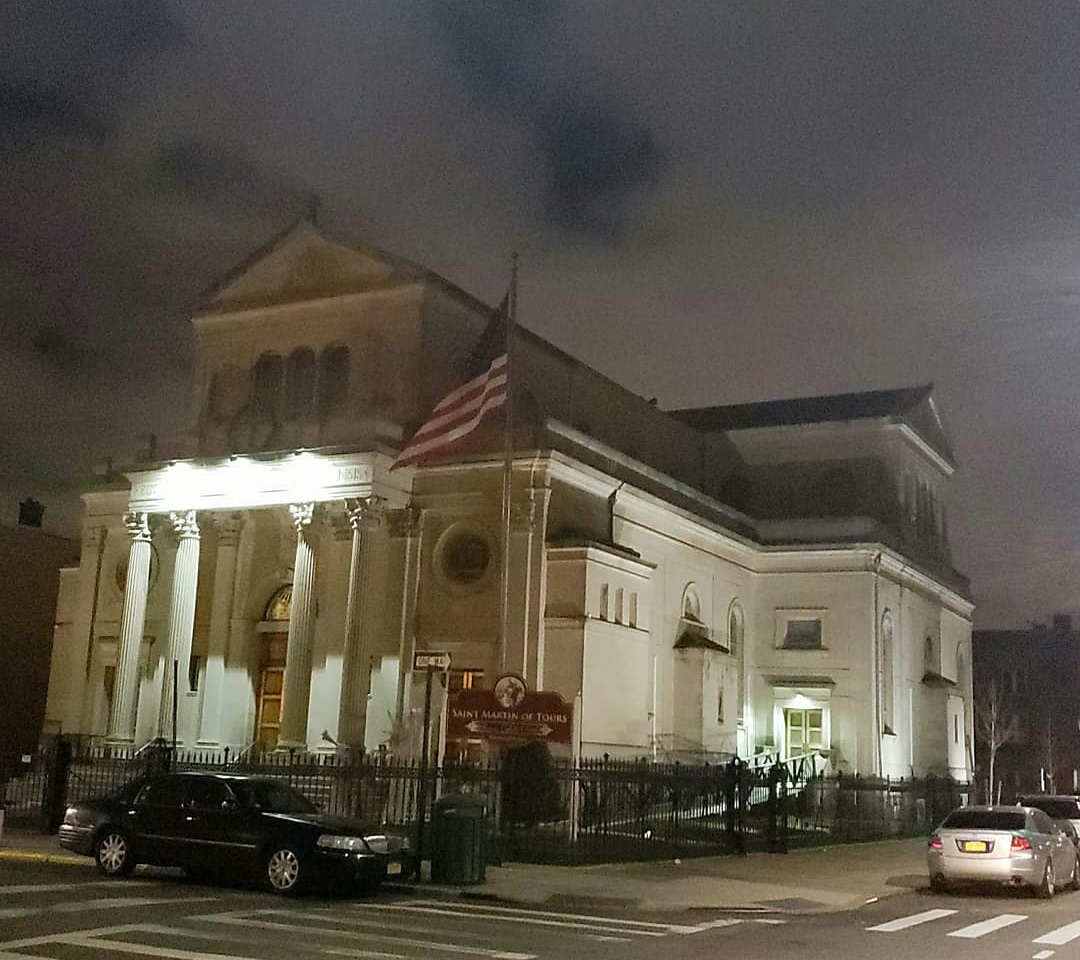
We found her in an old church in, what was then, a ‘bad’ neighborhood in Brooklyn. We had driven past this beautiful structure many times and it had often seemed almost abandoned.

It was not illuminated at night like many of the other churches, and we had never seen much activity, but, of course, we worked at night. Some of the windows had been broken, the openings protected with makeshift coverings that remained in place for years. But it was still a magnificent building that looked as if it were transported from another, much older country. When we went inside, it confirmed my long-held belief that beautiful architecture cannot be fully appreciated from only the outside.

Our patient was found in a large room with a high ceiling and several huge paintings which seemed very old. It had carved wood walls and furniture. The room smelled pleasantly of wood cleaner and old incense. Sister Theresa and the other nun were holding hands with two priests and they were all praying. When we walked in Sister Theresa perked up noticeably.

“Look,” she told them. “They sent us two women! Girl power!”

We were told that Sister Theresa Agnes had passed out not once, but twice. The first time she briefly passed out it was blamed on the heat of the day and a change in schedule and scenery. She remained slightly dizzy and became easily short of breath. The second time she was out slightly longer and it had occurred after walking up a short flight of stairs.

The 58-year-old seemed tired and she looked pale from across the room. She asked one of the priests if she could have some more water and he took a glass that had been near her and went to fill it.

Like my high school teachers, neither of the nuns was wearing habits, and they both had on running shoes. We talked about how the women had spent their day and asked how long Sister Theresa had been experiencing dizziness and fatigue. Upon much consideration and reflection, she admitted it had probably been going on for a few weeks.

“That would explain how you were able to beat me at tennis,” said the other nun. “She’s very competitive when it comes to sport,” she told us.

“Well I’m glad I’ll have a legitimate excuse now,” said our smiling patient.

When we seemed to have a difficult time counting her pulse, Sister Theresa noted that her heart rate was usually slow because she was a runner.

“Runner, yeah, sure,” said the other sister, rolling her eyes. “She’s a triathlete. She does marathons. She’s a cyclist, swimmer, rock climber, and she lifts weights.”

“It brings me closer to God and I feel better when I’m active,” she told us.

But her heart rate was really slow. It was remarkable that she was sitting up and having this conversation with us. We put her on our monitor and found her to be experiencing a third-degree heart block. It’s an electrical arrhythmia usually cured with a pacemaker. It was probably only because of her excellent physical conditioning that she had been able to tolerate so little oxygen circulating in her system for so long.

active A third-degree heart block is considered to be extremely rare in healthy, physically active individuals, making our patient an interesting anomaly. (We found out later that she had once contracted Lyme disease from her many sojourns outdoors, and it had put her at risk.)

We gave her an IV and tried our first line of treatment which we knew would probably not work. The drug we gave her, Atropine, works at a higher area of the heart than the area causing her electrical disruption. What she ended up needing was trans-cutaneous pacing (TCP).

TCP works much like an internal pacemaker by sending electrical currents that override the heart’s faulty pathways. It’s done through pads on the patient’s chest. To tolerate the constant influx of small electrical jolts we called our telemetry physician in order to give her narcotics. We would be giving her Valium, which works as an amnesiac. It wouldn’t exactly stop the pain but would make her forget it was happening.

We had everything set up and warned our patient of what was going to be happening. She assured us it would be OK. We started up our pacing and she suddenly started cursing like some sort of sailor. A polite sort of sailor.

“FANGDAMMER!” she yelled. This unique word hadn’t yet been added to the lexicon of expletives uttered to me by the public. It was quickly followed by “Poo On A Stick!”, “Crappity!”, “Schinittycrapes”, and “Dookerzonks” (I apologize if I’ve utilized incorrect spelling here. I’m going phonetically because my internet dictionary has been of limited use.) She denied being in pain but she continued to spew words like “Craditoollies” and “Snogerites”. It was an interesting phenomenon brought on by the sedation drug.

Rather than be outraged by all this foul language coming from a bonafide representative of a religious order, I wrote many of them down for future use. I figured that these were secret code curse words, backed up by the wrath of God. My enemies had no idea what they had coming to them.

The unorthodox street talk continued as we moved her to the ambulance. One of the priests helped us with our bags and seemed embarrassed by the constant flow of profanity coming from his colleague. We assured him that we had heard it all before, even though we hadn’t, actually. We have to maintain a professional demeanor so we told him that we understood it was just the Valium talking.

When we got to the hospital she thanked us and apologized for her “rancid potty-mouth”. She also said she had been blessed by our care, which was one of the nicest things anyone has ever said to us. She was quickly evaluated and it appeared she would be getting her own pacemaker that day. She looked forward to getting back on her feet again soon so she could continue to explore our big city. We said goodbye and thanked her for the new words we would be spewing back at terrible drivers with lesser vocabularies. We had all been blessed that day.

Here is a link if you’d like to learn more about third-degree heart block: https://my.clevelandclinic.org/health/diseases/17056-heart-block

The Sign In Sheet

One of my favorite partners was a notorious serial dater. I loved working with him for many reasons but his dating life really added some entertaining spice to our day. His social life left little time for sleep or recreation and I was fascinated with how he juggled his long list of romantic entanglements. Most of his relationships tended to overlap and sometimes the various women involved would find out that their romance had not been exclusive. “I never said it was,” he’d tell me, confused as to why women would get so angry when they found out about the others. As EMS people, with unusual scheduling issues, these conflicts, of course, found their way to the workplace, since that is where his pool of date-able women often originated.

The furious aftermath of their short term alliances led to many angry women showing up at the station after work and during. Some left nasty letters on the ambulance and several would develop stalker behavior. He was always very unbothered by all this. Their problem was never going to become his, he told me. He had such a pleasant, cavalier attitude to everything. One of his ex’s threw a very thick milkshake at the ambulance windshield that used up all our washer fluid to remove. “She always had a very good arm,” he’d tell me.

Seeing how women were drawn to him was incredibly interesting as well. Women would come on to him while we would be treating their husbands family members. He told me about taking one woman out who had been the daughter in law of a previous patient. “The mother in law babysat her kids that night so she could cheat on her son!” he told me, almost as shocked by this as I was.

There was an ER doctor that he was seeing who was very comfortable with having a casual relationship. She seemed like a fun, nice woman and she also had a difficult schedule as well so my partner’s no drama personality suited her. But she also wanted a baby. She was getting older and the biological yearnings for a child were constantly warning her that her time was running out. She offered him a no-strings-attached deal to father the child she desperately wanted and was happy to raise alone. My partner said he would love to ‘help her out’. There were many shifts that were cut short as he left work early to provide his biological material. “She’s ovulating right now. I better hurry,” he’d tell me with all seriousness.

He had neglected to tell her, as he neglected to tell many of the woman he was dating, that he’d had a vasectomy years before, after the birth of his daughter. “Don’t you feel guilty?” I asked. “You’re robbing her of possibly her last chance to have a child of her own.”

“I’m doing this woman a favor,” he told me. “Kids are a lot of work. She has no idea what she’s in for.”

Sometime later she moved on to in-vitro fertilization, believing that all the issues to conceive were on her side, given that he had fathered a daughter.

Many of the women he dated would come to him with worries that they were ‘late’ and he would light up, telling them “that’s WONDERFUL! Maybe it will be a boy, and my daughter can have a brother! But I’m pretty sure you’re just late,” he would tell them, confidently.

There were some people who used the word misogynistic to describe him and his nefarious ways with women but I never thought so. In fact I felt he was very much the opposite. Most of his friendships were with women and he never said anything negative about the ones he dated. In fact he adored them, all of them, at the same time. His positive attitudes towards women could be found everywhere. A group of us were complaining about a much despised captain and conversation had spiraled downwards to making fun of the way her uniform would never fit in any flattering way, causing her to be compared to a misshapen garden gnome. My partner’s contribution to the discussion was to point out that she had lovely eyelashes, the kind any woman would die for. He said it with complete sincerity. He could always find something positive about anyone’s appearance and could offer styling tips to improve further.

But for a time his dating life caused us some issues at work, at least I felt they did. One of his ex’s, who was a nurse at a hospital we went to every day, was extremely hostile towards him, and I by association. I felt a bit uncomfortable talking to her because her personality around us was very curt and short and sometimes rude. But my partner took it in stride, refusing to acknowledge any difficulty and treating her with either saccharine friendliness or as if she were a complete stranger.

One day she was working in the non-urgent area where she was doing triage. We had brought our patient in, sat him in the waiting area, and put his name one the list. Wanting nothing to do with us she made every effort to make us wait as long as possible. Normally the triage nurse would listen to our presentation, sign for us so we could leave, and the patient would be registered by the time she called on him when it was his turn. But she would only talk to us when our patient was called in the order he was on the sign in sheet. She made sure that all the other people on the list ahead of him would be fully taken care of first, with detailed interviews, several sets of vital signs, writing on the forms very slowly, ripping them up and starting anew when she made a mistake. She seemed to think she was punishing us by preventing us from going out and getting another call. When she finally did get to our patient, the slow, lengthy triage process moved forward with lightning speed and without even looking up, she quickly signed her name in anger, almost ripping the form. I doubt she even heard one word of my synopsis.

None of this bothered my partner. But when our next non-urgent patient wanted to go to the same hospital and seeing my oh-here-we-go-again reaction he told me not to worry, things would be different.

At the hospital my partner took my paper and went over to the small triage room. He gave her a big smile through the small cut through as he took the sign in clipboard. Knowing that the last name on the list was our patient she would, as last time, go through every name before it slowly, calling everyone before ours, even those who had been called earlier and had not answered. My partner wrote several names on the list, using different handwriting, and ended with our patient. He quietly replaced the clipboard, handed me our call report, and remarked that even though we might wait a long time with this patient, he doubted we would with any future patients that day. He gave me a smile and went off to flirt with the girls at registration.

When his ex-girlfriend-triage-nurse came out she gave me an unappreciative glance and took the list. With her stalwart look of efficiency she stood before the waiting room with the clipboard and called out for Peter File. I could see the frustration in her face as Peter File failed to come forward. “Peter File!” she called loudly. “You’re next!”

When Peter File didn’t answer, she asked for Clea Torres. “Hello? I’m looking for a Clea Torres!” she shouted. Did she really not hear herself yelling out these juvenile fake names?

Apparently not, because she continued down the list asking for Hugh Jassol. She was getting a bit desperate because there was only one name left on the list before our patient. Hugh Jassol was called many, many times. The entire waiting room looked around smiling, wondering if there had really been parents so mean as to name their child in a way that would subject him to much bullying, no doubt.

The only name left now was Jack MeHoff. Jack MeHoff had to show or she’d be forced to deal with me after a normally short waiting period. How would her ex learn that he shouldn’t have ended things with her if his partner wasn’t mildly inconvenienced?

“Jack MeHoff!” she yelled. “Jack MeHoff?” She was pleading for there to be a real Jack MeHoff to come forward. Everyone in the room except her seemed to realize she was calling out a crude masturbatory term. You could hear the desperation in her voice. She even went so far as to ask several of the men in the waiting room. “Jack MeHoff?” she asked one man sitting in the back.

“Certainly not!” he indignantly told her.

The Two Roslyns

I met the first Roslyn a year or two after I started working in Manhattan. The first time we went to her apartment she had accidentally broken a crystal vase and had cut both of her hands significantly. One wound on her wrist was bleeding badly enough that she thought she may have severed an artery and she was very distraught about it. Despite being upset, she was polite and mostly friendly. There was a lot of blood in her modern living room which had sweeping views of the East River. As I started the paperwork I leaned on her grand piano and glanced at the framed photos on display. They illustrated an enviable life. There were photos on safari in Africa, skiing photos in what looked like Switzerland and several happy pictures of friends and family. In one photo it appeared that a young Roslyn had gotten some kind of award riding horses. There was also a wedding photo with a handsome man. The man was not present and when it was time to go to the hospital she was asked if they could notify her husband.

“Oh no,” she replied, somewhat bitterly.

We took her to the hospital and while we were waiting to be triaged another crew of EMTs, who were leaving, saw her and said hello, using her name. She said hello back in the embarrassed kind of way a person does when they think they’ve been mistaken for someone else and are just trying to be polite.

“Do you know her?” I asked later.

“Yeah, sure,” they said. “She’s a regular.”

Really? Most of our ‘regulars’ are either homeless or have chronic medical conditions requiring frequent hospitalizations. Our homeless regulars are, almost without exception, people with substance abuse issues. She didn’t seem to fit either of those categories. What could make Roslyn a regular?

“You’ll see,” they said. “She calls all the time.”

She calls all the time? For what? Is she accident-prone?

I had forgotten about it until the next time we were summoned to her apartment, which was not too long after. This time her apartment was messy. It wasn’t ransacked but it looked more like someone hadn’t picked up after themselves in a long time. The wedding picture was gone and some other things looks slightly different but I couldn’t tell exactly what.

Roslyn was intoxicated and rambling about having things stolen from her apartment. Her statements didn’t go together and went off on tangents that had to do with her job or her family, both of whom she hated at that moment. A long time was spent deciphering everything she said but eventually it was determined that the missing items were taken by her now ex-husband thanks to a “misogynistic, two-bit, loser judge” who had sided with him in the divorce. It wasn’t clear what she had called for since she didn’t want to go to the hospital and there was nothing actually ‘stolen’. The police abandoned their report but stayed on to assist us in taking her to the hospital as she was in no position to make an informed decision to refuse. She was furious about going to the hospital. We were accused of working for her ex. Our previously friendly and polite lady had turned into a cursing, spitting lunatic.

Each trip to Roslyn’s home for the next year or so also involved alcohol to some degree of another. There were stints in rehab, relapses, and long periods when she was sober, when she’d call 911 for relatively minor things every now and then. On these types of calls, I think she thought of us more as company and tried to serve us food and played the piano for us. She told us about her stressful job that she liked, despite a boss who had gotten promoted over her. She complained about her ex, who she felt had made out too well in the divorce. She gossiped about her neighbors. And once, when I admired a painting in her hallway, she mentioned she had painted it, saying that her first dream was to be an artist and that someday she was going to try again. Getting to know her during these sober periods made it all the more heartbreaking as we watched her decline years later.

Eventually we were called to her home when she had relapsed and discovered she had acquired four new roommates-other alcoholics who were clearly taking advantage of her. At some point she had lost the job she loved when the same man who had been promoted over her fired her. She told us of her struggle to find another job even though, she said, she didn’t need one. It was just something she wanted to do because she was good at what she did. I suggested that she could now pursue being an artist and she berated me. There was a huge personality difference between sober Roslyn and drunk Roslyn.

She may have misjudged how expensive Manhattan living is or perhaps her roommates had drank her savings away, we could only speculate, but sometime later we ran into Roslyn at a different hospital, on the west side, where we found out she was living somewhere else. She had lost her modern apartment with the East River views and was temporarily staying with a friend until she got back on her feet. She was genuinely optimistic and I desperately hoped she would be able to improve her situation soon.

Every once in a while we would see her again in different places. If we were driving around and spotted her we’d get her some food or give her a blanket. She was very well known by most of the EMTs who worked in midtown and we’d hear updates from each other after periods of not seeing her. Sometimes when we did see her, she acted like we were long lost friends. Other times when we picked her up she didn’t recognize us. And many times she was extremely mean and abusive. Knowing her backstory led me to be more sympathetic towards the many other alcoholics we dealt with on the job, who were similarly frustrated and angry at anyone whose existence validated their fear that they didn’t have control over their day to day life.

I would eventually leave Manhattan to go to paramedic school and after that I worked in Brooklyn. I never saw Roslyn again. At the time I left, Roslyn had used up all of the favors her friends owed her and was now exclusively living on the street. It had taken only the short time that I knew her that she had gone from having what seemed to be a fabulous life of the rich and privileged to becoming one of the many overlooked and forgotten people living in the street begging for change. It is my great hope that she eventually did turn things around.

There was another Roslyn I remember from my days in Manhattan, also. The second Roslyn’s trajectory went in a decidedly opposite direction. She also became a semi-regular during the time I knew the first one. This Roslyn had only called 911 for herself once, after her leg was injured by a bicyclist as she sat on a curb begging for money. Roslyn Two became familiar to us because many other people called 911 on her behalf.

A very large percentage of calls to 911 for people living on the street are made by a sympathetic or concerned person who sees something that bothers them without often knowing the whole situation. Calls come in for ‘unconscious’ people who are sleeping or ‘not breathing’ when they definitely are. Despite the large number of these calls leading to interactions with people who take their annoyance out on you for being woken up or interrupted I still found it a redeeming quality of humanity that so many people were concerned enough for strangers to have someone check up on them.

People called for Roslyn because they thought she was abused. Our second Roslyn had a discoloration on her face that could be construed as a black eye if you only looked at it quickly. She seemed to have parlayed this birthmark to her financial advantage.

The first time I met her we were responding to a 911 call for a woman who was beaten up and left in a garbage bag. The location given was in an area of high tourist traffic near Rockefeller Center. When we arrived we saw a small woman wearing a black garbage bag as a dress. There were cut outs for her arms and she had shorts on underneath. She also had a cup that she used to solicit donations. When she saw us coming she ran up to us and asked “Did someone call for me again?”

When we said yes she said that she felt that someone who had given her money may have called. She apologized for inconveniencing us and assured us she was OK and did not need an ambulance. The garbage bag, she said, served to garner her more sympathy and had gotten her more ‘tips’ which is how she referred to the money she made panhandling. We made the call an unfounded but came back again later when yet another call came in fitting Roslyn’s description.

When we returned, she apologized again and reaffirmed that she did not want to go to the hospital or anywhere else. The man I was working with was very curious about her panhandling lifestyle and Roslyn was happy to talk with us about it. She said she could “take a break” but even while ‘off the clock’ and talking to us several people went out of their way to put money in her cup anyway. The ‘tips’ she was getting were not in coins, but in bills of $10 and $20. She told us this kind of donation was typical and that the summer months were very lucrative for her. During the Christmas season, however, she made much more, enough to pay her rent for the entire year.

We met her several times after that. Each time she let us know she as OK and each time she offered to buy us coffee for our trouble.

We learned much more about her enterprise when the bicyclist ran over her leg and she went to the hospital. She didn’t want to go initially but we convinced her by suggesting a cast and crutches could be helpful to her career. Her face lit up and she immediately hopped in our truck. As we wrapped up her leg she told us more about herself.

For a while she had lived in subsidized housing getting every government benefit available. She was very proud of the fact she no longer was, and that her kids went to private school. She said she had someone who helped her manage her income and that she had a diverse portfolio that included a 401K heavily invested in municipal bonds. She had worked it out that she only had to ‘work’ for 10 more years and at that time she would be moving to Florida to retire. She would be 38. Asked if she would continue to panhandle in Florida she said wouldn’t and was looking forward to picking up some hobbies like ceramics and painting.

A few months later I ran into the second Roslyn off-duty. I was out with some friends ‘in the city’ and as we were walking along a sidewalk she was there, sitting in front of a closed storefront with her outstretched cup. She looked very sad, almost in pain, as we approached she asked for some assistance. She didn’t recognize me without my uniform and with my hair down.

“Hey, it’s me!” I said. “EMS.”

Her whole demeanor changed. “Hey there, Nancy. Good to see you!”

“How is business going?” I asked.

“Pretty good,” she said. Then she winked and said “But it could always be a little better!” She stretched out her cup.

“I should be asking YOU for money”

She laughed and admitted that was probably true. I introduced her to my friends and made a little joke about how in a few years we’d run into her in Florida, sipping fruity cocktails with little umbrellas in them

“I’ll be in Florida all right,” she said. “But no fruity cocktails. I don’t drink. Ever. Drinking killed my father and I’ve never touched it. I’ve seen what it can do.”

I thought of the other Roslyn and agreed with her about the devastating effects it can have.

Arrest Me, Please

A man had called 911 for an accident he had. He said he was on a median and gave the street name that he was on, but instead of “street” it was really an “avenue”. When NYC likes a street name they tend to give it to several other roads as well, often parallel and in the same vicinity. It’s all part of the charm.

At some point our crash victim called back. Text in the call information stated he was “still waiting and getting impatient”. This time around he gave some landmarks and a few other street names nearby and we could figure out what area he meant. He had driven his car over a curb and into a light pole on the median. He would never give a good reason for the collision; no talk of swerving to avoid an obstacle, or another car forcing him off the road. He wanted us to just accept that the event had happened and just deal with the aftermath.

The front end of the car had a bit of damage and was leaking. There was also a screwdriver wedged into the front passenger door by the window. Inside the car we saw an open beer can in the cup holder and several stuffed animals lined up in the rear window that didn’t seem to have been affected by the impact.

The driver was a young man in his early 20’s with brown hair and brown eyes. He was walking around the car casually and talking on his phone. When we approached him he did that annoying finger thing rude people do to indicate they will be with you in a moment. Eventually he finished his call and complained to us about how long he had to wait. “What if it were an emergency?” he said.

We brought him over to our ambulance so we could check him out. He didn’t have any real medical complaints. He said his hand hurt somewhat but he could move it normally without much pain. Then he mentioned his ankle. He remembered it twisting when the car hit the pole. But it too seemed OK and he had walked on it without any issues.

When the police arrived our patient seemed unconcerned when they asked him for his drivers license and registration. He only handed them his license. “The car’s not mine,” he told them. “It belongs to my cousin. I was just borrowing it.”

“We still need the registration.” said the officer.

“You do?” he asked, very surprised.

“We’re going to move it out of the way and then we’ll talk about it.”

Again, the patient seemed unconcerned. When the police came back they asked if he was going to go to the hospital. The man decided that he didn’t want to go. The police waited until he signed our paperwork refusing transport and then they read him his rights and arrested him.

The car had come up as stolen. There was every indication that it was even without checking a database. The car had been running but there were no keys. The car had been hot-wired and there were an assortment of tools in the car that were geared towards car theft. There were also some other stolen goods in the car that were not connected to the car theft.

Could our impatient driver not have known how suspicious everything would look when he called? Initially we thought his cousin had perhaps stolen the car and our patient had taken it without knowing. But it didn’t explain the creative starting mechanism. And it turned out that, of course, there was no cousin. After coming up with several different versions of events that were easily discredited with the slightest follow up questions the patient admitted that he had done everything alone. When the police searched his jacket later they would also find a substantial amount of narcotics.

Was this his first stolen car? Was it his first time doing something illegally? I can’t imagine he would have ever been successful as a criminal. Our guy (not so) patiently waited for a 911 response he had initiated. He called several times for an accident he could have very easily driven away from. But instead he was going to jail.

“Why did you even call 911?” we asked him.

He looked at us like he couldn’t believe he had to explain it. “Because I had an accident. You call 911 when something happens.”

The Beeper

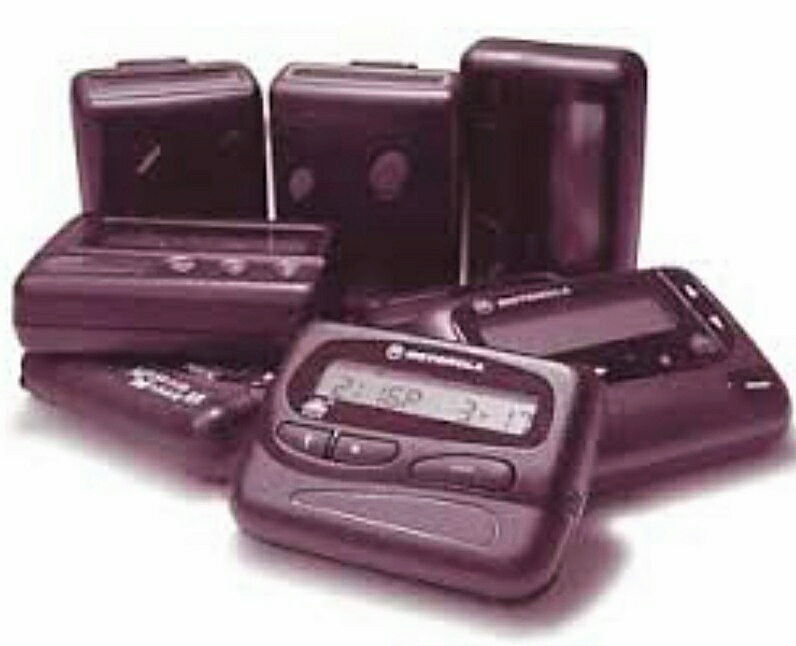
Back in the olden days, when access to a web-less internet was obtained through a company called CompuServe, the hottest status symbol of the day was a high tech device called a “pager”. People of importance would never think to leave their homes without the elite electronic device clipped to their waistband.

In the egalitarian age of the early tech boom, having a pager didn’t symbolize importance by being wealthy. Having a pager meant that you were important because you were someone people needed to get in touch with. Doctors, deal-makers, and your pot supplier; anyone who kept the supply chain moving. My partner also had a ‘beeper’ because he was a union delegate. As someone who tended to shun excessive social interaction it was nice to vicariously experience the marvels of the modern age through him.

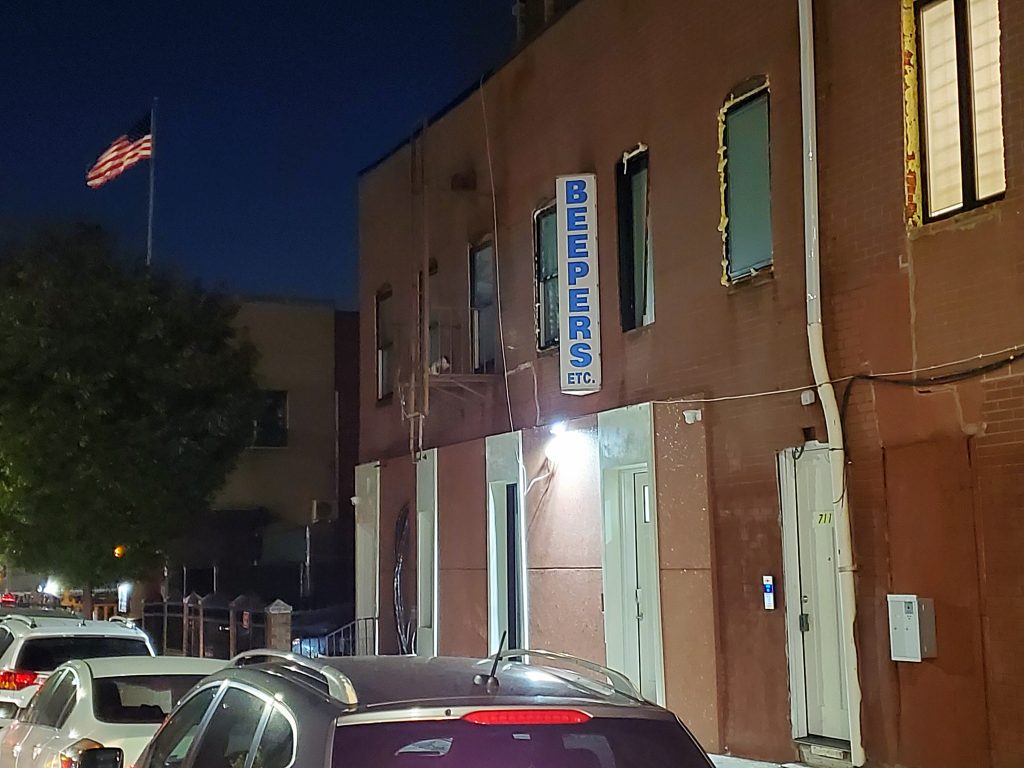
Despite newer technology some beeper stores are still thriving. (photo taken in 2020)

He had his newly upgraded alpha-numeric pager when we were called to a building on the Upper West Side that is renowned for its famous architecture. One of my favorite things about this job is the access it gives us to see the inside of amazing homes and places that most people only hear about or see on screen. Many of the pre-war building in Manhattan have subtle intricacies that are never given enough prestige when presented as part of a background to a movie or news story. Being inside these beautiful old places gives you an historic feeling of old New York and I like to try to imagine what the world looked like to people who lived there decades before.

The call was for an EDP or ’emotionally disturbed person’ who, the caller felt, was not taking care of herself. (When you’re wealthy the term for this is ‘eccentric’). The woman was obviously well off to be able to afford an apartment in this exclusive building that had famous artists and celebrities living it. We took the elevator up with several people dressed in expensive clothing as we wondered if, perhaps, our patient was someone we might have heard of in some way. We knocked on the door and it was opened by a little white-haired woman with the biggest, sweetest smile. She looked at us with awe, as if we were the celebrities and were here to fulfill a spectacular wish.

“What do you freakshow motherfuckers want with me now?” she said. She went on to elaborate that any requests for sexual favors were not going to be met. Her big smile never left her face.

She was wearing a stained, purple printed house-dress that was over a set of thermal long-johns. She had uncoordinated socks on her feet and her long nails were dirty. Behind her, we could see what seemed to be a huge, mostly empty, apartment with bare walls and bedsheets haphazardly duct-taped to most of the windows.

“Do you know who called 911?” my partner asked.

Somewhere in the apartment a Jamaican accented voice yelled out “I called for her. I’ll be right there. Let these people in, Miss Jensen.”

Miss Jensen silently opened the door wider and moved to the side. She never took her eyes off us and for a while she fixated on me.

“You better get yourself to a good dermatologist, your face is disgusting,” she told me. “I’m just being nice, seriously, I don’t know if anyone can help you. You really need one of them, plastic doctors. And you should get yourself some cocaine. That would take care of those rolls. You’re a big cake and cookie eater, aren’t you?” She gave me some more advice that she felt might assist me in “getting laid”.

“Why, you’re just a lovely beam of sunshine, aren’t you?” I remarked.

“You don’t have to thank me,” she said calmly. “Just get the fuck outta my house.”

“Now, now, Miss Jensen,” said the lady with the accent. A tall, slim, well dressed woman emerged from a room taking off a pair of latex gloves. She reminded me of Iman, the fashion model. “Forgive her, sometimes she’s real mean,” she whispered to us.

“I ain’t mean. I’m honest.” said old lady Jensen. She turned around picked up a plate. “Cookie?” she offered.

The woman with the Jamaican accent gave us a wide eyed serious look and shook her head, as if warning us they were loaded with poison.

Miss Jensen, seeing her plate of cookies rejected, casually threw them in the garbage, along with the plate. She then wandered off into another room. The apartment had a peculiar foul smell, like rotting food, but when the woman went away the odor seemed to travel with her.

“Thank you for coming. I’m Tanya,” said the other woman. “I work for Miss. Jensen’s family.”

“Are you her home attendant or a visiting nurse?” said my partner with a tone indicating that he didn’t believe she was. She wasn’t dressed like a home attendant or visiting nurse.

“No,” said Tanya. “I… I just sort of bring Miss Jensen the things that she needs. You see, her family doesn’t really deal with her anymore. But Miss Jensen isn’t in control of her finances. They give her a number to call, it’s a service, she is supposed to tell them what she needs, then they page me on this device and I go out and buy it for her.” She showed us her pager that looked just like my partner’s newly upgraded beeper. “But she doesn’t know what she’s doing. She calls the poor people at the service and talks to them about nonsense. So I come here from time to time and fill up her refrigerator and ask her if she wants me to bring her anything.”

Miss Jensen emerged from one of the many rooms of her apartment and went up to my partner just to inform him that he should expect to remain single for perpetuity. He informed her that he was already married.

“Poor woman,” she remarked, shaking her head.

She turned around and went back. The apartment was mostly empty. There was nothing on the walls and only a few scattered chairs for furniture. There was a path, however, that had been created with two rows of Lladro figurines leading to another room. There was no TV, no books and I wondered what Miss Jensen did all day.

Tanya continued, “I think I am the only one who comes here. I was originally told she had more people, a nurse, a housekeeper, but I think if she did once have them that they no longer come here. Miss Jensen needs help, much more than I can give her. But when I talk to the family, they say she is fine. She is not fine. She hasn’t taken any medicine in a long time from what I can see. She’s not taking care of herself, and I can’t do it for her. I’m not qualified and they don’t pay me for that. I do all kinds of other things around here because I feel sorry, but I’m not giving her a bath or combing her hair. She sometimes scratches with those long nails of hers. You can’t tell her anything. She won’t listen.”

“Do you know what she’s supposed to take?”‘ I asked.

I heard Miss Jensen yell from wherever she was, “COCAINE! I use cocaine, that’s why I can get a man and you can’t, girly!” She cackled like the evil villain in a Disney movie.

Tanya looked at me, slightly embarrassed and slightly smiling. “She’s supposed to take psychiatric drugs. I do not know what kind”

I went over to find Miss Jensen to see if she would let me take some vital signs. She was actually very pleasant to me and allowed it, rolling up the sleeves of her dirty clothing and revealing a dry, frail arm. Her vitals were pretty good. I asked her if she would go to the hospital with us.

“I’d love to get out of this place for an afternoon,” she told me. “Let me change my dress.” She walked over to a large closet and when she opened it, it appeared that many of the contents of a normal home were stored inside. There were unopened appliances, a large television, boxes of clothing, dishes, and random objects. They were all piled in, seemingly arranged in an intricate balancing act. I feared that while she was digging out an identical purple house-dress from a box, everything would come tumbling out of alignment but thankfully they didn’t.

Her new going-outside house-dress was also stained and unwashed. She turned her back out of modesty as she took off the old dress and put the new one on over her long johns. Tanya came into the room and asked Miss Jensen if she might want to take a shower or bath before leaving. “It’s my only chance,” she looked at me, pleading. I was very much in favor of the idea.

“What for?” Miss Jensen scowled. “I’m quite lovely just the way I am.” Then she gave us all a big smile. As she walked around her barren apartment she stopped near one room, pointed and said with another big smile “That’s where the… accident happened.”

Tanya looked at me seriously and whispered, “Her family thinks she killed her husband. A big wall unit fell down on top of him. That’s why they want nothing to do with her. I don’t think she was ever strong enough to crush him like that. But I think she wants everyone thinking she could. Then again, she is very resourceful.” She also added, “I don’t think it was a happy marriage.”

Maybe we were in the home of a noteworthy individual. If Google had existed I would have checked her out. Scanning through miles of microfiche at the local library didn’t hold the same instant gratification.

Tanya said she had to go, she had some errands, but promised to meet Miss Jensen in the hospital. Miss Jensen was ready to go shortly after. She seemed to be happy to go outside and said she hoped she’d see the same MD she saw the last time Tanya made her go.

When got into the elevator to go down there were four other people already inside. As the doors closed, their faces indicated that they had gotten a whiff of the malodorous cloud that surrounded our patient. We slowly went down another few floors before stopping to let another person in. I could see the people in the back considering whether to get out or not but they didn’t decide quickly enough and were stuck with us for the duration. The person who got in clearly regretted it. Suddenly my partners beeper started beeping loudly.

“What’s that?” Miss Jensen asked angrily, looking around.

Without missing a beat, my quick witted partner whipped out his pager and checked the message. He looked at Miss Jensen and said, “Why, it’s my smell-o-meter. According to this, you are exceeding acceptable clean air standards by 65%. It might be time to do something about that.” I burst out laughing. The others in the elevator didn’t seem to know what to do. They looked scared but also seemed to smile a little.

Miss Jensen considered this, for the first time thinking about taking advice instead of giving it. She demonstratively sniffed the air, and herself. “You might be right,” she said quietly. “It might be time.”

« Older posts Newer posts »

© 2026 streetstoriesems

Theme by Anders NorenUp ↑