The career archive of a NYC paramedic

Author: Nancy Gwillym (Page 2 of 6)

My First Baby Delivery

I was sitting in my doctor’s waiting area perusing through piles of long-expired magazines. It was 40 minutes past my appointment time and there were others who had waited longer. The staff told us that the doctor was running late, she had an emergency delivery at the hospital. We were offered to reschedule but I preferred to get my visit over with, as did most of the others, apparently.

Eventually, the door opened and my doctor hurried in. As she took the scarf off her head, she apologized to the staff and everyone sitting.

“Thank you for waiting,” she said. “It was a difficult delivery but there’s another beautiful baby boy out there today!” Everyone clapped and the extended appointment times were quickly forgiven.

Not long after, my name was called. I put down the April 1999 edition of Mother and Baby and headed into one of the exam rooms. When she came in and saw it was me she exclaimed, “Oh! Now here is someone who will appreciate my hectic morning!” (and I did). “It was a problematic pregnancy, the numbers were off, there were issues at the hospital but it came off OK and now mother and baby are doing well.” She seemed so relieved.

“That must be the greatest experience,” I told her. “Presenting a happy mom with her healthy baby…”

She knew I was a paramedic and we had often shared interesting medical conversations interspersed with the usual chit-chat as she scraped my cervix. She was my favorite doctor by far. I had met her own kids at the office and she frequently gave me what she called “Standard Jewish Grandmother Advice” about love, baking, and getting older, even though she was not much older than I was.

“You’ve never delivered a baby?” she asked me, surprised. “You need to intercept all of those cab drivers who are doing it. They’re all over the news.”

“I’ve delivered babies,” I told her. “But I’ve never had a happy, normal delivery.”

She looked concerned, as is everyone I tell this to, especially my new coworkers who have yet to have a baby delivery under their belt. Her look turned to horror when I elaborated on the handful of delivery experiences I had. I am grateful there aren’t that many.

Often, it’s not so much the delivery but the circumstances around it. I am incredibly happy that I have not encountered any serious issues during the process itself. The mothers really do all the work, usually. You just guide the little one out, suction, flick the feet, place 2 clamps on the umbilical cord, and cut in between. Easy, right?

Not exactly, it is a bit nerve-wracking for me, for some reason. It would probably be good to do all this in a controlled environment but that has never been my experience. It’s always occurred in inconvenient and less-than-ideal areas where you’re groping about for all the little things that get scattered when you rip open an OB kit nervously.

None have ever been delivered in the back of my ambulance, which would have been a more controlled setting. But I’ve seen ambulances where a baby had been born and the aftermath made it appear as if a serial killer had brutally tortured several people with a knife so it probably isn’t as controlled as I would like to imagine it is.

The circumstances that made my delivery experiences PTSD invoking had more to do with speculation about the series of events that would happen after. All of my baby births have involved underweight, drug-addicted little infants who were quickly handed off to the social service agencies of our city. It’s difficult to process the feelings of hopelessness you experience when you assist in the arrival of someone who immediately needs help from our overburdened bureaucracies, in addition to the Neonatal Intensive Care Unit.

The first baby I assisted in delivering was to a homeless woman in a small park flanked by tall office buildings. The park was not very big and she was right in the middle, sitting on some newspapers on the floor next to a bench.

She was naked from the waist down with her legs spread wide. She had not gotten prenatal care and wasn’t sure how far along she was. When we got there, the baby was just about to rear his tiny head. She couldn’t be moved.

As the baby was coming out, I looked up to see hundreds of people looking down at us from the floor-to-ceiling windows of the buildings surrounding us. We used a sheet to create something of a tent but they probably knew by now what was going on. It was a harrowing experience for a first-time OB call and I was far more nervous than the mom.

When the baby was born, he was really tiny. The mother smiled when we gave him to her and she rubbed his small face with her finger. She seemed a bit distant and not at all happily overwhelmed as I expected her to be.

I look back and wonder if she were trying not to get too attached to a baby that would probably be taken away and put into foster care. I had assumed she was exhausted from giving birth without an epidural.

She had told us she had given birth once before. “Another boy,” she had said, somewhat wistfully.

She told us he was in foster care, explaining that in NYC babies weren’t allowed to live on the street with homeless mothers. She expected to be given a placement in a family shelter now that she had this child. She hoped that when that happened, she could try to get her first child back. It hadn’t occurred to me at the time that she probably could have gotten into a family shelter with the first child, with that policy, and yet her child was still presently in foster care.

Not long after arriving at the hospital, the baby was quickly whisked away into an incubator. We found out that he was only 5 pounds and would probably be going through some alcohol withdrawals.

People at the hospital berated us for not keeping the baby warm enough, despite using our last sheet and blasting the heat in the ambulance in the summer. This was the same hospital that was stingy with their one-for-one policy with bedsheets. We now have swaddle blankets for infants that do a better job of conserving body heat, but at the time we were at the mercy of the hospitals for sheets and blankets which were used for so many things, including blocking the view of unwanted onlookers and keeping newborns warm.

When we returned again a few days later with a different patient we were told that the mother had snuck out of the hospital, leaving her baby. She had given us all a fake name.

Once again we were treated harshly for “not checking her ID” as if we had technology that can detect fake Medicaid cards. They had fallen for the same ID but it was easier to lash out at us, I suppose.

I asked (someone else) about the baby and they said he was still in the pediatric ICU and would be placed in foster care. We were able to see him for a brief time. Surrounded by other tiny babies he looked rather healthy and very cute and also very vulnerable. I couldn’t imagine someone running out on this little one. His first experiences in this cold, harsh world had already been cold and harsh.

I was initially filled with anger towards the mother. But I understand that she was an addict and addiction-thinking is governed by instincts that become redirected toward everything substance-related. Perhaps, I reasoned, she had left him for unselfish reasons, knowing that she couldn’t give him what he needed.

It filled me with tremendous sadness, thinking about that poor little baby starting out so alone. What would life be like for him? Would he ever see his mother again? Would he meet his brother? Would he get adopted by a nice family?

Whenever I think about this call it becomes a long list of negative thoughts: of the lonely baby, the mother so substance-addicted that she chose a life on the street with her drug of choice over this little boy, the hospital with their petty need to take things out on us that we had no control over, and those office workers with their horrified faces. I imagined the story the gawkers would tell their friends later and how the story would be told.

I also wondered about all the blood that had been left in the park. We didn’t have any kind of resources to clean it up and I remembered the police officers, who had been on the scene with us, leaving at the same time. An average person walking their dog through the little area would probably assume someone had been murdered.

I never saw the mother again. It’s a little strange for EMS people to not run into the same homeless people in the area. They become our regulars and we develop a rapport with them. We even get to know the ones we don’t transport on a regular basis, waving to them as we drive around the neighborhood. Maybe she had found some other place to go or had gone into treatment, prompted by the birth of a baby she had left at the hospital.

When my story, and my exam, was finished my MD said little. I felt terrible for taking away the high of her successful morning and tried to steer the conversation toward other things. Afterward, I went over to the office staff to give them my copayment and take the usual card they hand out, which reminds you to make another appointment at a specific date. This time, I was also handed a prescription. No medications had been discussed and I was a little surprised. But it wasn’t for medication. It had the address of a bakery nearby. She had written on it, with a smiley face, “Get yourself some cheesecake. (a small one). Doctors orders”
The Long Distance Girlfriend Experience

The ads on late-night television implied that for about $5 a minute, you could speak with an eager nymphomaniac clad in sexy lingerie and writhing about on the satin sheets of her king-size bed. “They’re definitely over 18!” many of the adverts proclaimed. The callers probably assume the woman they’re sharing sexual secrets with is doing so from the private comfort of her own home. How romantic (or hardcore) would it be to hold an intimate conversation in a cubicle next to 30 other cubicles?

The phone sex industry exploded in the 1980s with the emergence of 1-900 phone lines. 1-900 phone numbers charged exorbitantly higher rates than regular phone numbers, usually by the minute, and seemed tailor-made for carnal interplay, or psychic readings. Despite the best efforts of puritan government agencies and the later development of technology that delivered porn to your phone, sex chat lines continue to endure to this day. There is a lucrative appeal, apparently, to engage in naughty talk with an anonymous stranger. It provides an outlet for men to engage in a soft-porn fantasy: the long-distance girlfriend experience.

One day I was shipped out to work with someone in downtown Brooklyn and I ended up having one of those “nymphomaniacs” as a patient. It was where my innocent eyes were opened to the elicit world of landline love.

We were sent to an office building in the business district. When the doors opened up on the 6th floor, it looked much like the typical office settings I assume most people work in, though there were some notable differences. The cubicles were larger than any of the cubicles I’d seen elsewhere and the dividers seemed to be covered in a thick soundproofing material. Large billboards near the ceiling, holding messages about bonuses and incentives, had images of shiny, red-painted lips talking into phone receivers held by hands that had shiny, red-painted fingernails.

None of the employees resembled the woman in the pictures hanging overhead. No one wore lip gloss and any manicures were subdued. The uniform of the day appeared to be sweatpants and unmatched leisurewear. There wasn’t a teddy to be found, though there were plenty of hiking boots and flannel shirts. Aside from the relaxed dress code, another thing that let us know we weren’t in the standard American workplace included the two large and very intimidating security guards at the entrance.

A friendly woman greeted us immediately and told us she’d take us to the patient. The woman wore a lanyard around her neck attached to two pieces of official-looking ID proclaiming her name to be “Bambi”, quotation marks included. A quick glance at the other lanyard IDs revealed that a name ending in “i” was likely a prerequisite for employment. We were surrounded by a number of Rikki’s, Tammi’s, Freddi’s, and Toni’s.

As we walked down the path towards the patient we listened in on snippets of raunchy phone interactions. The women vocally expressing their enthusiasm for deviant sex acts did so while filing their non-red nails, thumbing through magazines, and various other multi-tasks. One woman’s attention was intensely directed towards a birdhouse she was building out of popsicle sticks, while at the same time feigning believable interest in bondage. Her face lit up when we admired her handiwork as we walked by.

The whole time we were walking, we were followed by a young man, dressed in a suit and tie, holding something. When we reached our patient, whose lanyard gave her name as “Candi”, quotation marks included, the man propped a prosthetic leg against the wall of the cubicle. He gave a polite nod and left.

“My leg!” shouted “Candi” with delight. “Thank you so much!” She was a fairly large, middle-aged woman with a haircut that resembled a crew cut. It looked as if a tremendous effort was being expended to breathe.

“Bambi” told us that when “Candi” started complaining of difficulty breathing they moved her into a bigger cubicle that had a window, which they opened so she could get some air. “Bambi” proudly told us that “Candi” was their most consistent Gold Star employee and hoped we’d give her Gold Star treatment. Going by the billboards near the ceiling, it meant that she was receiving the highest bonuses.

My partner asked what we were both thinking, “What gets someone a ‘Gold Star’?”

“Call me and you’ll find out,” “Candi” said through labored breaths but with a wink and a sly smile.

“Candi” was sweaty and very pale. Our visual medical impression told us something serious was going on. We got to work quickly putting her on oxygen and assessing her vital signs. When we asked her about her medical history she dumped the contents of her large handbag onto the desk. She dug around through the pile that included her wallet, some keys, a lighter, a pack of cigarettes, a few candy wrappers, and a very large rubbery dildo, to hand us her medication bottles. They indicated she had hypertension, diabetes, high cholesterol, and a thyroid condition. She also told us she had renal failure and was under the care of a cardiologist. For someone who was only 45, she had an extensive medical history.

She opened up her flannel work-shirt so we could put on the little pasties for our monitor and we listened to her lungs, which were clear. When I mentioned this to our patient, whose other ID said her name was Mary Robles, she gave a somewhat resigned expression. “Then it’s my heart,” she said.

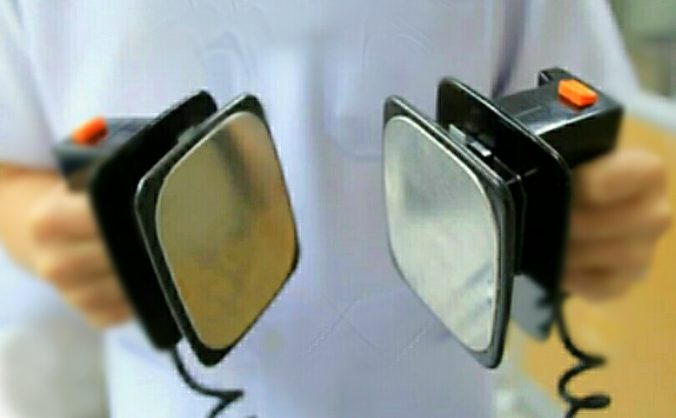
She pantomimed the cardiac monitor paddles from the days of old, imitating the recoil of being shocked by a jolt of electricity, as her thumbs pressed imaginary buttons. She’d obviously been through this before, apparently with machinery using 1970s technology. When I told her we used sticky pads now, not the old-school paddles, she nodded sadly, knowing as we all did, that the pads did not hold the same dramatic effect.

Our modern cardiac monitor indicated that her heart was beating erratically and very fast. At the time we didn’t carry any drugs that would fix it. As Mary/”Candi” understood, a dramatic jolt of electricity was the only thing we could do. But we did have some drugs that would help our patient with the pain of the procedure. We just had to call our MD to get approval.

“Bambi” waved over to the phone on the desk and told me I could use it to make the call. She went over to help “Candi” put her stuff back into her purse without telling me about the numerous assortment of buttons on the phone. It was hard to stifle a laugh as we watched her try to wrestle that dildo back into the overflowing purse. My partner turned his head as he attempted the easier job of starting an IV. Making the phone call turned out to be far more challenging.

For the youngsters who have never used a landline I’ve provided this video:

I had some difficulty figuring out how to get an outside line with their phone. I couldn’t find a button that produced a dial tone so I started randomly hitting each one. It seemed that each button I tried gave me access to the phone calls being made from the cubicles around me. Each call I inadvertently eavesdropped on was long past any foreplay discussion and some involved heavy moaning. It was rather eye-opening conversation and when “Bambi” noticed my reactions as I quickly hit other buttons, she stepped in to assist me.

Laughing, she explained that we were in a “Quality Control Cubicle” and a regular assignment at this office was listening in on phone calls. “If the customers only knew…” she said.

With her assistance I was able to get in touch with our telemetry doctor who gave us permission to use Valium to sedate Ms. Robles. He and I both expressed some concern over the procedure we were going to do, given the overall precarious health of the patient, but the MD admitted there was no other option. The patient, herself, wasn’t the least bit worried, however.

“Bring it on, I’m ready!” she said, loud enough for the MD to hear.

“Looks like everything will be fine,” he told me.

Cardioversion is a heart-stopping experience, quite literally for the patient, but also for paramedic caregivers as well. After you sedate the patient and charge up the machine, there’s usually a bit of apprehension before hitting the button that will deliver a few joules of electricity through the benign-looking pads we use now, instead of the familiar paddles seen on screens large and small. Interrupting the abnormal electrical activity going on in someone’s heart carries the risk of stopping it permanently. It has never happened for me yet, at least in someone who was sitting and talking to me, but there’s a first time for everything.

In the case of Mary Robles, sending those 100 joules of electricity to her heart did nothing but cause her to utter a loud, prolonged, moaning-type of yell, which fit in quite well with her current surroundings. I’m sure the soundproofing material of those cubicle walls did nothing to block the sound to her fellow moaners nearby. Except Mary/”Candi” wasn’t faking it, this time.

Her heart went right back to the very fast, erratic, and inefficient way it had been beating before. This meant we would be pushing that button again, this time with a slightly higher dose of electricity.

Our patient was unfazed. “Fire away!” she said after we shot her up with another round of Valium.

We were far more nervous than Ms. Robles when we pushed the button a second time. Once again, we delivered the jolt which brought forth another yelling type of moan. It was also followed with a relieved kind of “Whew!”

We all carefully watched the monitor with anticipation. Thankfully the jumbled electrical patterns organized themselves into a regular rhythm. Our patient knew what this meant even before we told her and she raised her arms and yelled a triumphant, “YES!”

She told us she felt much better and her vital signs reflected it as well. As she grabbed her prosthetic leg she told me that losing her leg made her better at her job. I gave a confused look and she just smiled. I still wonder what that meant.

As we headed to the hospital, she told me that many of the employees there were customers of hers. I asked her how she knew but she just gave me another wink and a smile.

Bleeding Hearts

Almost immediately after receiving our job for an “unconscious in front of a deli”, another call went out to a different unit, alleging that a person with “severe abdominal pain” was on the same corner. Two more ambulances and a fire truck were dispatched to a “Cardiac Arrest” at an address with cross streets strongly implying that they too were headed towards the same intersection.

The EMS equivalent of the Cavalry converged upon that one corner, which had a large deli at its crossroads. A disheveled man was sitting outside on an overturned milk crate. He had a dirty beard and the clear flask of a well-known brand of vodka dangled, somewhat, out of his jacket pocket. Though he glanced at us when we arrived, he made no effort to flag us down. The man was very much awake and seemed to be comfortable. We all assumed he was probably the intended target of all these 911 calls; people often call for strangers who have no idea that someone thought they were in need of emergency care. But we made a good effort to check around and inside the store to make sure there wasn’t someone else, someone with a true emergency, in need of medical personnel.

The man became angry with our efforts to locate patients who might have matched the medical complaints we had been summoned for (seizing, unconscious, and/or in cardiac arrest) and finally announced that he had called 911, not just once, but several times, for himself. He berated our unprofessional-ism for not recognizing that his non-distressed demeanor and lack of effort in announcing himself obviously meant that he was the person in cardiac arrest/having a seizure/experiencing severe abdominal pains.

“I hadda call THREE times! Three! It took you guys almost FIVE minutes. What if this was an emergency?”

“So you’re admitting this isn’t an emergency needing an ambulance?” we asked.

He backtracked a little. “Well, it most certainly IS an emergency. But not the dying kind.”

We let the other crews, who were getting off duty shortly, know that we could probably handle this medical enigma on our own. They thanked us and wished us luck.

The man walked over to our ambulance carrying a large plastic shopping bag that he was very protective of. A diverse bouquet of pungent body odors wafted towards me as stepped into our vehicle.

“Your entire agency should be dissolved by the city. Waste ‘a money. They just need taxis. Free taxis for everyone. No one needs these big trucks.”

We pointed out how our service is designed for medical emergencies and that we are supposed to handle life-threatening conditions.

“For what? They can go to the hospital if they have a medical condition.”

It was no use explaining.

Once inside, the man immediately demanded that we take him to a hospital that was not the close one nearby. He was geared up for an argument but he got none. The hospital he wanted wasn’t unreasonable, although it meant I’d have to try to block the smell a little longer.

“Them nurses there are NASTY!” he told me, as he shook his head. “Ugly too. But that’s the hospital it’s gotta be.” He looked sad but determined, as if he had resigned himself to a task for which he’d be martyred for.

He refused to answer my routine questions about his name and birthday. He was ready for another argument, explaining how I wasn’t entitled to any of his personal information. He went on a long diatribe about privacy issues but I had already put “unknown/refused” on my paperwork. When I asked to take his vital signs he also refused, telling me he’d “sign the paper”, meaning he understood how this all worked. He flipped my paperwork over to the correct section and signed the name he told me I wasn’t entitled to know.

When I asked him about his reasons for going to the hospital he seemed comfortable revealing some of his medical history. He told me he had high blood pressure but he wasn’t taking his medicine because it made him “less of a man”. He said he was “healthy as a horse, and hung like one too”. A big wink, in my direction, accompanied that information.

I also received a very long list of every injury that had ever befallen him. He had TMJ from being slapped by his ‘ex’, he lost a tooth by biting into a biscuit from a large fast-food chain he was currently under litigation with, and he fell down some stairs when he was drunk, which injured his hip. He ended his story by telling me that his last MRI showed he had bulging discs.

I just wanted something halfway relevant to give to the triage nurse. “Am I telling the ER that you have back pain?” I asked.

“No, Moron, I’m telling you I ALWAYS have back pain,” he shook his head again. The torture I forced him to endure…

He called me several other names and titles that illustrated his frustration with our procedures. I was a “bureaucrat” for requesting an exam and interviews instead of just taking him to the hospital where he “needed to be right away”. I was also a “lazy union drone”, an “idiot”, and my favorite, “a feminazi” because I was doing a “man’s job”. He told me I had foolishly “bought into that whole women’s rights nightmare” because I was a “man-hater”.

He went on to complain about my partner as well, for not refusing to work with a woman (“it takes the masculinity away from all of us”). He told us how much he hated the entire 911 system, the city itself, the shelter system, and he went on and on about our previous mayor, who he believed was still “running the show”. He hated “bleeding hearts” and the socialists who were destroying our city. He also complained about the city services he wanted but did not exist, like free taxis. He complained about the amount of money he received from his federal Supplementary Security Income, telling us a monthly total that was more than my partner and I took home with our regular salaries.

“You can’t live on that in this city!” he screamed.

I know man, I know…

One person, in particular, he decided to vent his frustrations about, was the woman who had purchased food for him from the deli. She was another “MORON” for not understanding that he’d been asking for money for food, not actual food.

“Maybe I wanna make my own choices,” he said. Then he referred to her with a really bad slur for a female. “She was like ‘I don’t want my money being used for alcohol. My religion is against alcohol. I don’t want to support any bad health habits…’ blah blah blah. Fucking bleeding heart…Those people are the ones destroying everything.”

As he was berating the woman who bought him the contents of his bag, he took everything out of it to rearrange the items. She had given him a large bottle of water, a big can of iced tea, an assortment of baked goods, a package of socks, a package of t-shirts, tissues, a small bottle of pain relievers, a few bagged snack items, cold cuts, and two large Styrofoam containers of food. She certainly was an evil monster.

“This asshole didn’t even have my food heated,” he told me with all seriousness. “You know, they let you reheat the food from the food counter in there. She must have known, there’s a sign right there on the sneeze-guard. I would have gone in to heat it myself but I’m banned from the store. I spit in a few of their food trays once. I didn’t like their choices and I had a right to express myself when they didn’t take my concerns seriously. Bunch-a bleeding hearts…” It seemed to be his favorite insult.

“Cold food. Can you believe it?”

As someone who ate between calls and on the run, sadly, I was all too familiar with room temperature sustenance.

We had just reached the ER when he was finished fixing the bag up the way he wanted it, with the food containers near the top. He promptly undid his seat-belt, slid over to the back doors, and expertly opened the back lock. Then he made his way over to the hospital entrance without waiting for either my partner or myself. Now that he had reached his intended destination, he no longer needed to have anything to do with us.

He punched the ‘secret’ code into the panel that opened the electronic doors and proceeded to walk past the triage area. A security guard followed him, telling him he needed to wait for the nurse.

“I don’t need a nurse,” he told him. “I know where I’m going.”

The security guard didn’t seem to know what to make of that but decided to just let him continue rather than pursue him any further. Our patient walked right over to a small, closet-sized room that the nurses used as a kind of lounge. It contained a locked bathroom, two chairs, and there was a microwave on a counter.

He opened the door to the microwave, put in the first of his two containers, and pressed the button for “potato”. The man had concluded his ultimate errand.

The entire ER came to a standstill as every nurse in the vicinity noted what was happening. Each face expressed disbelief and anger. They looked around at each other to see who was going to act first. Oh boy, were they outraged!

The nurse who was supposed to triage me marched right over to the small room with resolute determination. She was fuming. “Sir, this room is off-limits to patients.”

“I’m not a patient,” he told her matter-of-factly. “I’m just here to heat my food.”

“Sir! This is a restricted area. You need to leave! You can’t just come in and start heating your potato.”

“It’s not just for potatoes. I’ve got pork that needs to be heated to a specific temperature or I might get sick. There’s also some mac and cheese, some green beans… ‘Potato’ is the most efficient setting on a microwave. You don’t even know how to use this thing, do you?”

“This microwave does not belong to you. You can’t use it. You don’t belong in here.”

“Sure I can. My taxes paid for this microwave.”

“Sir, you don’t understand. You need to leave and get back over to triage,” she said as she pointed to the triage desk. You could tell that her patience had reached its limits.

“No, you don’t understand. This is the whole reason I came here, to use the microwave. I’m not sick. And if I were, I sure as hell wouldn’t come here.” He looked around the ER. “This place SUCKS!” He seemed surprised at everyone’s reaction as if he’d said something perfectly reasonable and they were all getting angry for nothing.

“Security! Security!” the nurse started yelling.

At the same time, another disheveled looking man, who was on a stretcher in the hall took a moment to defend the hospital. “Ahhhh, it’s not so bad…”

A different patient decided to tell our guy, “you don’t even pay taxes.”

“Yes I do,” he answered. “I pay taxes every single day on alcohol. Do you know how much the liquor tax is in this state? It’s robbery. I coulda bought 10 microwaves by now with all the cash I’ve given to this bleeding heart state.” Bleeding heart was, by far, his favorite term.

The security guard, now forced to contend with the disruption he might have intercepted earlier, simply parroted what the nurse was already saying. “Sir, you have to leave…”

“Hold your pie-hole,” said our patient as he dipped his dirty finger into different sections of his Styrofoam container. “I’ll be out of your hair in just three more minutes. Your appliance needs servicing, by the way. For 1000 watts, ‘potato’ should have done the trick by now.”

The bald officer decided to get to the root of the problem. Looking around, he asked, “Who brought this man here?”

I raised my hand.

“What’s wrong with him?” he asked me.

“I don’t know,” I replied honestly. “He refused to provide any information.”

“What? Are you all stupid?” announced the guy I had brought in. “I CAME HERE TO USE THE MICROWAVE.” He yelled each word slowly as if reprimanding a room full of misbehaving children who did not understand. Then, his mood switched over suddenly to humor us. “Now that I’m here, maybe I’ll lay down on one of these stretchers when I’m done. Probably have the ‘itis in a few minutes…” He laughed, seemingly oblivious to the unchanged demeanor of the crowd.

The nurse, who despite her constantly annoyed expressions was one of my favorites, became more of my hero when she decided to take control after giving a disgusted look to the security guard. She shoved past the foul-smelling man and took his food out of the microwave.

“The Jo-velle Deli on Louisiana and DeKalb. Excellent buffet. Smells great, right?” Our guy gave high marks to the establishment that banned him.

The nurse took the food and started marching with it, towards the electronic doors. Our man followed her, although he seemed to be confused about what was going on. When she got outside, the Styrofoam container was semi-tossed onto a broken stretcher in the ambulance receiving bay and she wordlessly went back inside.

After she signed our paper, which was accompanied by a “look”, we went back outside to find our man eating the food that terrible woman had purchased for him. He looked up at us and smiled, pointing to his meal.

As we got in our truck, he yelled at us to wait for him. He would be needing to microwave his other Styrofoam container soon and there was only one other hospital we could take him to now that he was banned from using the microwave at this one.

Fighting Demons

It was easy to see that the building had once housed a storage business. It was square and utilitarian and it said “Horizon Storage” on one of the walls. The only thing that let you know that it now served as a house of worship was a big wooden sign over the lettering of the previous owner. “Vision of the Awakened Triumph Church” it proclaimed. “The Rev. A. Thompson, PhD, Pastor”.

We walked into a large room where a congregation wearing their Sunday best had their attention fixated on several men, surrounding another man, who was wearing a burgundy suit. They were in a circle around him, each with an arm touching him, and they appeared to be praying. When the congregation saw us their serious faces of concern turned into smiling faces of relief.

“Hallelujah, and welcome!” they greeted us. Their friendliness and hospitality instantly endeared me to the congregation.

We went over to the man they were praying over and the other men moved away. The man dressed in burgundy instructed the others to continue with the service.

“It’s important,” he told them.

Although we were in the back of the room, it was difficult to hear the patient and we suggested going out to the ambulance. But the man insisted that he didn’t want to go to the hospital. He did not even want to be checked out in it. He said it was important that he stay. So we did the best we could to evaluate him where we were.

Brother Henry was a little disheveled. He had some dust on a sleeve and a few bruises on his hands. While he was telling us about a few more injuries, a nearby woman yelled at him to “Tell them how you went out! They don’t care about a couple of bruises. Tell them how you ended up on the floor unconscious!”

She told us that was why we were called. “We wouldn’t have called if it were just a few bruises,” she told us, as if no one would call for such a frivolous reason. (How I wished that were true.)

Brother Henry looked a little embarrassed but he shook his head and said with his voice rising, “I may have fallen down but I was never knocked out!”

We asked him if he was dizzy now or before the incident and he said no. Another woman said he had “problems with sugar” but Brother Henry assured us that he did not have diabetes.

All of this, coupled with our initial difficulty hearing, led us down a medical path to explore the origins of what happened. We hooked him up to our monitor and evaluated his vital signs several times while continuing to ask questions. At one point, the entire congregation broke out into song, and it was modified to be about us, being the instruments of the Lord. They also prayed for us several times. We felt like celebrities.

We could find nothing of concern with our exam but we still recommended Brother Henry seek additional evaluation at the hospital because he may have passed out.

Brother Henry interrupted, “Passed out? I never passed out.” We explained that we didn’t know what had caused the incident and he shook his head and said very emphatically, “Sure I do! I told you when you got here. I was fighting a demon.”

This took us both aback somewhat as we tried to figure out what metaphorical context he was referring to. Was he an addict? What other ‘demons’ are there?

It turned out, however, that he meant a literal demon, the kind that involved being a mythical beast intent on evil.

And everyone in the congregation agreed.

Brother Henry explained that he had given a particularly powerful invocation which had conjured up an entity that he described as half man, half beast. Everyone in the room nodded in solemn agreement. A small puff of smoke had appeared, through which the demon had entered, laughing. He said his head was large and somewhat resembled a buffalo.

“With wide horns!” said one lady. “That’s how he was gored!”

Brother Henry lifted up his shirt to reveal a red circular bruise. There were fresh scratch marks on the floor, which, we were told, were made by the cloven hooves of their common enemy. Henry showed us his damaged pant leg where underneath was a long red scratch and more bruising. He said the demon had kicked him. His description had the demon towering over all of them at around 7 feet. Others volunteered that he had long fingernails painted red and glowing yellow teeth. Not one of the 30-40 people in the room disputed this description or version of events.

“Where is the demon now?” we asked.

The demon had disappeared, they said, when it saw that he was no match for a powerful man of God. Brother Henry was a strong elder, they explained, and he was backed up by people of unshakeable faith.

Vision of the Awakened Triumph: 1, Demon: 0.

My partner and I just looked at each other for a minute. The paperwork was going to be tricky.

I quickly opened my call report paper and flipped it to the side where the RMA (refusal of medical attention) section was and Brother Henry readily signed in the appropriate areas. The Rev. A Thompson, PhD, witnessed it himself. It was either have him sign the RMA or haul all 40 of them to the psych ward for evaluation.

As we left, the friendly people of the church all wished us well and said they would pray for us. We could use it.

“What just happened in there?” my partner asked. I shook my head. I thought about the bruises and the rips in his clothing, the seriousness of everyone in the congregation.

What could have caused all those injuries? What had they all witnessed? Some sort of mass delusion? Maybe there was a reasonable explanation that they interpreted as a demon? Who could say? We weren’t there. I just hoped our paperwork wouldn’t be flagged by the reviewers at the Office of Medical Affairs.

MAST On the East River

My partner, Jack, and I were cruising down the FDR Drive towards another EMS station in lower Manhattan. Our lieutenant had sent us on an errand as soon as our shift started. We were to retrieve and deliver a large box of Very Important, Desperately Needed, Get Them Here ASAP supplies and equipment.

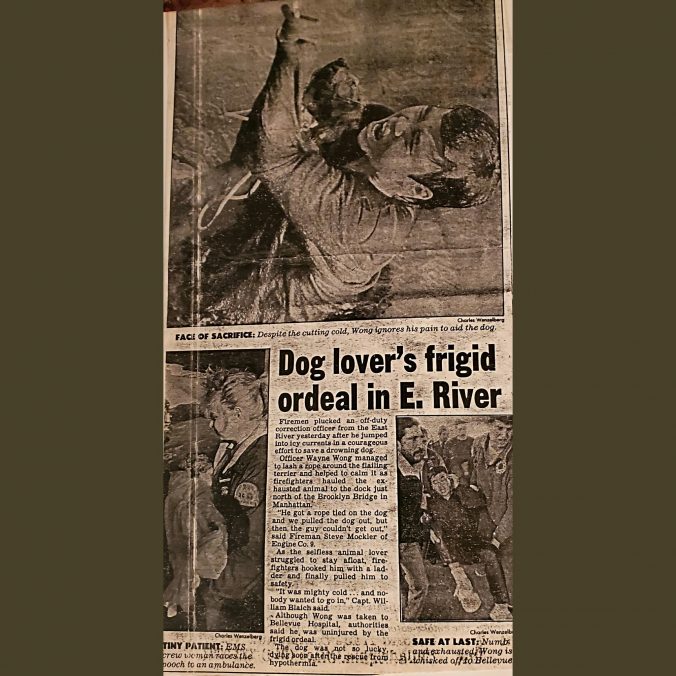
The FDR highway circles the outer edge of the borough on the east side. It was a cold January day and we could see some chunks of ice being tossed about in the choppy waves flowing next to us.

We got off at our exit but continued along the underpass near the water’s edge. Not far after getting off, we noticed some commotion up ahead. Two sanitation trucks were parked askew, along with a few random cars. A small group of people had gathered at the low wall at the side of the river. They were all fixated on something in the water.

My partner gave me a big grin, and I knew that our box of Super Important ASAP Supplies was going to wait a little while.

Jack parked our vehicle properly and we got out to see what the fuss was all about. We joined the group and looked in the direction where they were all focused. We were horrified to see a medium sized terrier struggling to stay afloat in the cold water below.

“What happened?” my partner asked.

The group explained that, minutes ago, they had witnessed the dog jump onto the wall and lose his balance, sliding over to the other side, which had a 20-foot drop towards the icy river. They were trying to find a way to get him out. Someone had obtained a rope, but it was thin, lightweight, and blowing around in the wind. As each wave crashed against the wall near the dog, the group, including my partner and me, gasped and grew more panicked.

Suddenly, one of the men jumped into the water to get him.

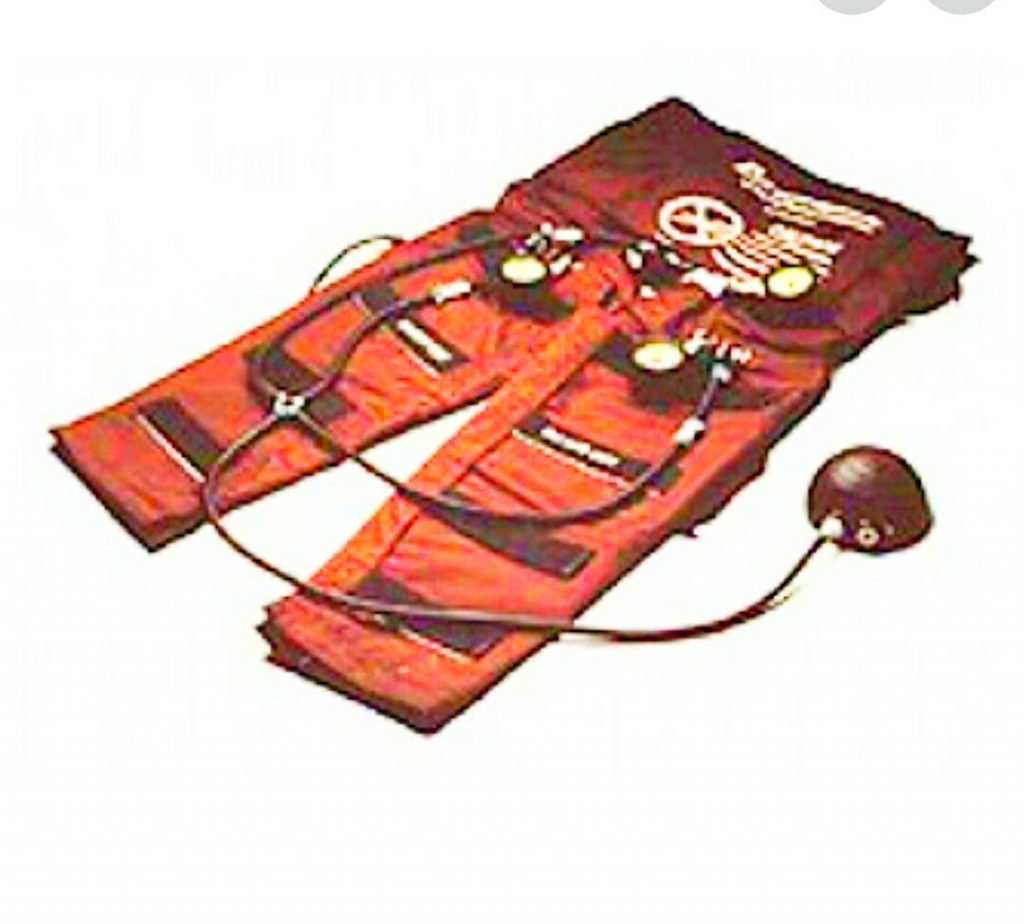
My partner rushed over to our ambulance. He opened one of the outer compartments which held the equipment we rarely accessed. He dug out the bag containing our MAST pants, short for Military Anti-Shock Trousers, and went to work pumping them up.

MAST pants- medical equipment and flotation device

MAST pants are a medical device once thought to assist trauma patients by shunting blood from the lower extremities to the vital core organs in the torso. They were actual pants made with rubber bladders which were inflated via a foot pump. They have since fallen out of favor, but at the time they were considered a vital piece of equipment, required on all ambulances.

Without a human or a mannequin in them, the MAST pants required a lot more air than we had ever needed in our practice drills. The two of us alternated, stomping on the pump attached to hoses that attached to the pants. It only took a few minutes to get them puffed up completely, but it felt like an eternity.

Once filled, we brought our life-saving medical device to the wall where the rope was attached, and they were thrown into the East River to be used as a flotation device for our brave swimmer and the unfortunate dog. As the man draped himself and the dog over our makeshift life preserver, he seemed relieved that some kind of plan had been enacted to get them out of the water. (Perhaps his look of relief was in response to the siren heard in the distance.)

FDNY had been called and arrived on the scene quickly. The firemen were able to reach down to grab the dog who was quickly handed to me. I began trying to warm the small animal with some sheets and blankets I had ready.

Their plan to rescue the man involved sending a ladder over the wall for him to grab. This plan would be quickly modified because the man wasn’t able to hold on to the ladder due to his hypothermia.

As the firemen lowered their ladder down the other side of the wall, my partner and I noticed something purple drift away towards the middle of the river. While the others were distracted by what was admittedly a spectacular water rescue, Jack and I watched with trepidation as our state-required medical device bobbed along the chop of the current.

We were going to have some elaborate explaining to do.

Without being able to do anything about it at the moment, I rushed to the dog to the ambulance where I tried to warm him up near the heat vents.

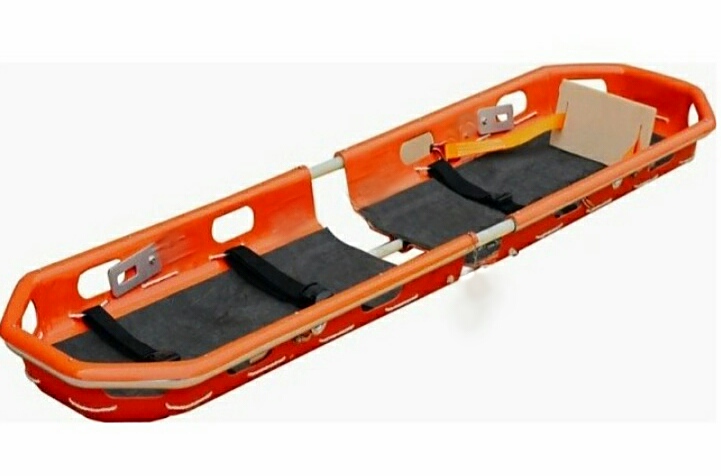
Shortly thereafter, he was joined by his rescuer, who was brought into our vehicle by the firemen in a large Stokes basket, which ironically resembles a small boat.

stokes basket

One of the firemen took the dog and I got to work cutting off the man’s wet clothing. Even my hands were becoming red and losing grip strength from handling the cold pieces of cloth, I couldn’t imagine what that man was feeling. He was so hypothermic he had stopped shivering. The man’s lungs were clear, though, and I was grateful he hadn’t aspirated any of the river water.

The heat coming out of our vents seemed pathetically lukewarm. The fireman and I tried desperately to warm our patients en route to the ER. We used every available sheet and blanket and also utilized bandages and anything else dry. Thankfully, the hospital was nearby, and we rushed our man into the ER, where quite a few of the people working there expressed disbelief that someone would risk their life to rescue an animal.

“I know if the situation were reversed he would have tried to help me,” he told the naysayers through chattering teeth.

Sadly, the little dog did not survive.

My partner gave me a few minutes to cry in the back of the ambulance before he brought up the important issue at hand: “We need to acquire another set of MAST pants.”

It was quite a dilemma. Even before their capabilities were debunked, MAST were rarely used. They weren’t something that we were going to easily find laying around in the discarded EMS equipment areas of the ER. At the stations, they were kept locked up because, we were told, they were very expensive.

Given that we could be held financially liable for the improvised flotation device making its way down the East River, this was going to be our top priority, even though we still had to pick up that Super Important Box of Very Necessary Things at the other EMS station.

We returned to the station that had been our original destination and tried various, unscrupulous, ways to gain access to their well-fortified, spare equipment locker where gilded medical treasures were kept. Our covert acquisition op was a disastrous failure. We tried a similar distraction technique back at our own station which also crashed and burned. It appeared we were ill-suited for a life of thievery and deception.

We spent the rest of the day brainstorming ways we might redistribute the city’s MAST pant supply in our direction. Many creative ideas were explored but none ended up being feasible. Eventually we resorted to volunteering ourselves for every trauma job in our vicinity so we might pretend we used them in a situation where they were warranted. As long as we had paperwork that reflected a MAST application we would be in the clear.

Unfortunately, there was no trauma to be had that day. Anything that came over as remotely shock-inducing ended up being unfounded or severely downgraded. The day was getting shorter and we needed to resolve this by the end of our tour.

We decided to pick up an auto accident in the hope that this could be our golden ticket toward a set of MAST pants. Manhattan is well known for its gridlock traffic, so collisions in the borough weren’t likely to produce the kind of injuries our anti-shock device was designed for, but we were getting desperate. It looked like we were going to have to fudge some paperwork.

It made me feel very guilty to do so, I had never lied on my call reports before, but I felt much worse about the idea of forking over a majority of my paycheck for a piece of equipment that was well on its way towards obsolescence.

I produced two call reports for the same, barely injured, patient. The correct one would be handed into the hospital, and the well-elaborated one would end up in our lieutenant’s “Review” box. It was tough keeping a straight face when we told our boss what we needed from the Fort Knox of EMS supplies, but he gave us what we needed.

As we made our way back to our truck, with a great sigh of relief and a new set of MAST pants, we were assigned another call. A multi-service operation was underway and we were going to be a part of it. Another man was in the East River and all the emergency services were converging on him.

We were assigned to a pier in the area where PD and FD harbor boats were patrolling the water. Numerous sightings had been called in for a man drowning. According to the chatter on our radio, some of the units thought they knew where he was. They were looking for someone struggling near the base of one of the bridges. Then, soon after, we heard they had gotten closer but the man appeared to be long gone, as in dead and decomposing. This was not an uncommon call type for us, actually. It was sounding like our last job of the day was destined to send us on a trip to the morgue.

One of the boats finally did reach the ‘man’ and declared it unfounded over the radio. They did, however, tell us to standby. When the FDNY fireboat pulled up near us, one of the firemen held up their long hook. Attached to its end was an inflated pair of MAST pants that had been mistaken for the bloated body of a drowned man.

“Those look like the MAST pants we use!” my partner cheerfully yelled over to them with an incredulous inflection. “How do you think that happened?”

Young Thespians in Jail

A huge building had gone up near our area. It took up a whole city block but it was unremarkable and there were no signs advertising what it was used for. We weren’t all that curious and just continued to drive past it with occasional passing interest. For many years we were able to blissfully ignore it.

But then, one day, our good fortune changed and we became very familiar with this large building, as we started going there all the time.

We found out that the building was a juvenile corrections facility, housing children age 16 and under who had committed the worst crimes and required a high level of security. They had an infirmary and a medical staff that had been getting by without calling for an ambulance for so long that their new about-face was somewhat perplexing.

Our first call there was for a 16-year-old boy having seizures. He had obviously never witnessed anyone having an actual seizure, either in person or on TV, or he could have provided us with a more believable performance. There are different kinds of seizures and some of them present differently, but our patient hadn’t mastered any of them and seemed to be making things up as he went along. With his floppy arm movements and erratic blinking, I had a hard time believing that the professional medical staff in the infirmary had bought into this pageantry.

Perhaps they believed he was in need of hospitalization because the kid didn’t have a seizure history and may have been worried the seizures were a manifestation of a hidden brain tumor.

We gave the young man an IV, which was easy to do since he temporarily halted his flowing, dance-like arm motions so we could get it without accidentally sticking him elsewhere. My partner and I had spoken at length about how painful that would be, while we were preparing our IV set up. I guess he had been lucid long enough pick up on that bit of information. After we secured our IV, the patient resumed his feeble attempts at seizing, but would again, temporarily, stop each time we pushed medications through the IV.

We have had many people fake seizures for us, for various reasons. Sometimes it’s to be dramatic, for others it’s an attempt at getting some Valium. We didn’t know the motivations for our current patient, but if he wanted Valium he’d have to do a better job at convincing us.

We could still give him “the cocktail”, however, as we called it, for our “Altered Mental Status” protocol. At the time we carried Thiamine (vitamin B1) which was part of the cocktail triad, along with Dextrose (sugar) and Naloxone/Narcan (the drug that reverses the effects of opioids).

It makes me sad that new paramedics will not have the ability to witness the placebo effect of the Thiamine wonder drug, since it has been taken out of our protocols currently. Thiamine was considered so benign that the board, who decide our protocols, found it to be an unnecessary expense. They had obviously never witnessed its miraculous efficacy.

If the kid envisioned a future on the stage, he could have learned something from us that day. Having had so many opportunities to practice our own acting skills, I’d like to think we did our routine convincingly. We used the standard script developed for these occasions. It’s one that all paramedics seem to have subconsciously downloaded into our psyches, possibly acquired subliminally when learning our protocols.

We start out with Dextrose and then deliver the Narcan, each time announcing to each other, with solemnity, that we hope the drugs work because the patient appears so seriously ill. We then kick up our level of resolve by moving to the standard, somber discussion about Thiamine.

“I guess we will have to give the Thiamine,” I announced with extreme concern.

“I know. I can’t believe the other drugs haven’t worked yet. We have no choice,” remarked my partner.

“But remember the last kid we gave it to? He’s a vegetable now, on permanent life support. I’m worried about its safety for teenagers. I don’t think they tested this enough on younger patients.”

“Yeah, but it’s still in protocol, at least until they settle the lawsuit. I’m not getting in trouble. Hand me the vial.”

“I don’t know, I really want no part of this,” I said with emphasis.

“It’s OK,” said my partner, nobly. “I’ll take complete responsibility.”

Miraculously, our 16-year-old made an instantaneous recovery in a matter of seconds. He sat up as if sleepy, wondering what was going on. What was happening? Did he have a seizure or something?

The dopey medical staff was also impressed, which had me seriously doubting the framed credentials hanging on the wall. We took him to the hospital to get “checked out”. We gave the ER staff a brief description of the psychedelic dancing he wanted to have interpreted as a seizure and they said they looked forward to the presentation.

A very short time after we dropped off the male, we were called back for a female. The juvenile center was certainly making up for lost time after all those years of handling the residents by themselves. Our second patient was 15-years-old and she was trying for the Academy Award in the Asthma category.

She had done a good job of convincing the inept staff that something asthma-like was going on. I wondered if they had ever dealt with a real asthma patient. The staff was in a panic, knocking things over and bumping into each other, trying to fill her nebulizer device. We, on the other hand, were extremely familiar with asthma and all of its manifestations. It made up a major percentage of our call volume. We gave her performance a decided thumbs down.

All of her ‘wheezing’ was caused by a concerted effort on her part to constrict her throat muscles. Her lungs were absolutely clear. Because she had to un-constrict her throat muscles to talk to us, her ‘asthma’ was temporarily abated when she answered our questions.

I discreetly pointed out to one of the nurses how miraculous her recovery was. The nurse seemed to feel it was their quick action with the nebulizer that was responsible, despite a floor wet with spilled asthma medication. My faith in those accreditations on the wall continued to wane.

We took the asthma-girl to the same hospital as the seizure-boy because it was the closest. As per the policy of the detention facility, each trip to the hospital meant that two corrections officers were needed to accompany the patient. At the hospital, the two pairs of officers met up. They resented that their day had been interrupted by extraneous visits to the hospital, as it left them short-staffed at the facility. They too suspected the youngsters were faking their illnesses and they were furious.

About two days later the ‘asthma girl’ had another attack, despite a handful of new medications prescribed by the hospital. We had only gone to our newly-noticed juvenile facility three times at that point, but it was already growing tiresome.

When we wheeled her into the pediatric emergency room, lo and behold, the seizure boy was there again also! He had suffered another episode. It was a spectacular coincidence.

I noted the time on my watch and saw that the pair’s latest medical attacks had occurred at the same time of day as their previous episodes. Their amateurish performances were on a schedule.

I took one of the disgruntled correction officers aside and inquired about the relationship between the two and was shocked to discover that not only were they boyfriend and girlfriend, they had landed in the facility for committing the same crime together. I could have never predicted it.

The corrections officer had much dirt to spill for us. It turned out that the lovers were not just terrible actors, but terrible human beings as well. He, and later the other officers, told us that the young couple had attempted to kill the girl’s grandmother when she became an impediment to the young lover’s plans.

She had not approved of her granddaughter’s dating choice and grounded her one weekend. The next day, they put drain cleaner in her coffee. Despite the unusual smell and taste, the grandmother had ingested enough to cause severe burns to her esophagus and was in critical condition at a hospital.

The pair had left the drain cleaner and the coffee cup containing the drain cleaner on the same counter, making it easy for the police to put two and two together. Their fingerprints were all over the bottle and the coffee cup, and neither of them had called 911 when the grandmother began choking and writhing in pain.

A neighbor happened to be walking past the apartment and heard the fall and the elderly woman’s attempts at screaming. The acting debut of the young criminal lovers, which consisted of pretending to be upset and shocked that grandma had drunk something so toxic, was not well received by the police or the neighbor.

Ever since their arrest, the two had been housed in separate areas of the same facility and there were never opportunities to come in contact with each other. It seemed that the only place the couple could be reunited was at the hospital, even if only for a short time. As a result, their “illnesses” became more and more chronic, wearing out the patience of the EMS community, and also the hospital staff.

Many people we knew had taken at least one of them to the hospital at some point, and all of them, thankfully, mocked their poor interpretations of an asthma attack and a seizure.

Having witnessed the damage drain cleaners can do when ingested, I had zero empathy for the plight of the star-crossed lovers and their efforts to be together. Nor did any of the other EMTs and paramedics, who were getting a little tired of having to participate in their charade of a medical emergency. It was curious that those two were the only patients we were ever called for.

How long would we all have to wait until they were sentenced and incarcerated elsewhere? We agreed that this thing needed to be nipped in the bud if we wanted to resume our ignorance of the large building on Pitkin Avenue.

We collectively decided that other hospitals should share in the poor acting abilities of the young would-be murderers. We were sure the corrections officers would be willing to assist us in the endeavor.

The next time we went there, it was for the female, who protested when we gave the name of our intended hospital destination. “Her doctors” were waiting for her at another hospital. Surprisingly, it was the same hospital her boyfriend had been transported to just an hour before. The corrections officers jumped right in and explained that their policy had been revamped to keep inmates separated outside the facility as well as inside.

During discussions of the new policy, our patient’s ‘asthma attack’ miraculously subsided and she decided that she no longer wanted to go. We had to take her anyway since she was not old enough to make the decision on her own and the facility required transportation.

Since her reason for going had been thwarted, she protested wildly over her desire to stay. But the concerned nurses at the infirmary noted how her disease had been progressing so badly as of late, and they would not be comfortable with her staying there.

The young actress was a victim of her own success.

Now that she was going against her will, she whined and complained about the waste of time it was for us to take her. Why was she going if she was OK now? She glared with hatred at me and the corrections officers when it was clear we weren’t going to turn the ambulance around, despite her best arguments.

After a short interval of quiet contemplation, she suddenly told us, and this was shocking, that she *didn’t* really* have* asthma! The whole thing had been a sham! Just to see her boyfriend!

She had put one over on us, but good.

I couldn’t believe we had been tricked. I tried my best to convey how stupid we felt, that as medical professionals, we had not been able to tell.

She smugly nodded, proud of the way she had manipulated us into believing her. She let us know that she was going to use the exact same skills to convince the jury that she shouldn’t go to prison. She admitted the case didn’t look good, but she was sure no one would want to send a young girl to prison for killing someone with so little time left on the planet anyway.

She was confident the acting skills she had honed on us could make a jury feel sorry for her, and probably her boyfriend, too. After all, look at how many professionals had bought into her performance. She smiled a self-satisfied smile of superiority that I hoped would serve her well in prison when she got convicted.

The Panhandler’s Brawl

No one expects panhandlers to keep banker’s hours, but having someone bang on your window, cup in hand, at 3 am is more than a little unnerving (and unlikely to result in a donation). For a woman working alone, it’s a huge a safety risk to roll down the window for a random stranger in the middle of the night. Even though the possibility exists for it to be a real request for assistance, in finding an address or to alert me about a possible medical problem, it’s not something I would normally do. But sometimes, particularly in the summer months, the absent-minded desire for a cool summer breeze brought about by an open window can make you fair game for the cash-soliciting opportunist.

Like every lieutenant, I have my regular locations where I park to take a break from driving. For a time, I had a rash of men asking for cash at not just one of my “spots”, but all of them, as if I had a strange GPS homing device attached to my command car. The odd thing was that all of the men universally told me they needed the money specifically for the purpose of buying baby formula. The details of their stories varied but the ending always involved a poor infant somewhere being deprived of sustenance.

In my head I would wonder where one would even purchase infant formula in the early hours of a new day. The location was never near a 24 hour supermarket or any other stores that might carry it. It fascinated me how so many different men used the same story. Where had they all come up with this idea? How could there be so many babies suffering, waiting for these men to return after successfully locating kindly strangers to pay for food, food which is advertised all over the city as being available for free with certain assistance from city agencies.

Luckily, at our station we actually had infant formula. It had been left over from a recent food drive or humanitarian aid campaign after the person giving it missed the donation deadline. As the supply waited in limbo for the next charity drive I noted a soon approaching expiration date on one of the containers, making it perfect to give away to the next stranger that interrupted my midnight hour me-time.

I carried the little canister with me every night I was on the road but it wasn’t long before another dedicated baby advocate made his way to my vehicle.

“Can you help me ma’am?” he asked. “I’ve got a new baby at home and we are out of formula at the moment. It’s not like I can talk to the social services people to get another voucher at this hour. Just a few dollars and I think I can get enough to feed the little guy until tomorrow.”

He would probably wonder about the incredible coincidence as I made his day, I thought. “You know what?” I told him, “You are in luck! I would love to assist your baby. What’s his name?”

The man’s face lit up as he told me “Henry”. It made my heart swell knowing I could provide a real service to this man who would no longer have to wander the streets in search of food for his new addition.

“You tell little Henry that we at EMS have his back and welcome him to the neighborhood!”

“I certainly will!” he said happily as I dug around behind my seat.

Finally, I pulled out the prize: Baby formula! It was exactly what he had asked me for.

I was surprised the man wasn’t ecstatic. His search had ended, the long walk was over. He didn’t even need to go to the store. He could go straight home now. The hero EMS lieutenant had taken care of all of it!

And yet I had never seen anyone so disappointed to receive exactly what he had asked for. For a moment it looked as if he was going to say something else but thought the better of it before walking away, dejected. He turned to give me a quiet ‘thank you’ before he did.

**************

A few weeks later I was approached for a hand-out while I was waiting behind another car at a traffic light. It was near the corner of a major thoroughfare and on the weekend, in the summer. It was early, around 3 or 4 am when the panhandler spoke to me through my foolishly half-way lowered window.

“Hey there boss-lady,” he said in an extremely friendly tone. “Can you please help a man out?”

Another man immediately appeared after that first one. This man tapped the first on the shoulder. “You should know better than to bother a woman all alone in her car!” Finally someone got it. If I was going to search through the seat cushions for change, and I wasn’t, he would have been the one entitled to it.

“It’s not safe out here!” the second man continued. “It’s the middle of the night, early morning even. We can’t expect a woman to roll down her window to a complete stranger!”

“But she’s EMS,” said the first man, as if that alone precluded me from the general safety concerns of other women.

“It don’t matter,” said the second guy. “It’s not safe. Would you want your daughter doing that? You should be ashamed of yourself.”

The original panhandler didn’t seem fully convinced but backed off, away anyway. When he had retreated away far enough the second guy came closer to my window. “Can you believe this guy?” he asked me, shaking his head. “But since I got rid of that guy for you, how about a small donation?” That was quite a slick maneuver I had to admit.

All this time I was behind a large SUV at the light. But the light had changed and the SUV wasn’t moving. I came to realize he was double parked but I had no real way of squeezing in between the space he had left next to him. I was essentially trapped. I noticed this around the same time a third man approach my vehicle.

“Listen, man,” said this third man to the #2 man. “This is my corner. Who told you this was OK?”

“I’m just helping the lady out,” said #2 to an unconvinced #3.

“It looks to me like you’re helping yourself out,” said #3. “You need to leave.”

A short exchange took place near the front corner of my vehicle as I desperately looked for the driver of car the blocking the road get out of my way. While I was looking around I noticed the first guy watching the exchange with interest. He slowly made his way back over.

“I didn’t leave just so that you could come over and take what was coming to me!” he announced to the #2 man with anger and great indignance.

I felt somewhat like an impala carcass being fought over by lions and hyenas. If anyone should be indignant it should be me. I wasn’t planning on handing out cash to anyone at this juncture and I was desperate for an escape plan. Now a fourth man meandered over. He seemed to come over to assist #3. This caused #1 and #2 to become temporary allies.

The angry discussion escalated very quickly in a short period of time. Fingers were pointed dangerously close to faces. Then, it was bound to happen, one of those fingers came in contact with a chest. It was barely perceptible to the average voyeur (me) and consisted only of the light brushing of a fingertip onto fabric but it was a move quickly met with more fingers clenched into a fist backed with considerable force.

#1 was the unlucky recipient of the brutal blow. He would have been smart to have remained sidelined earlier. He was the smallest of the four men and seemed to have been drinking enough to already have been impaired. #2 rose to his defense, punching back in return but #3 was a large hulk of a man who obviously used his panhandling income on gym membership. After being shoved back, #2 retreated but continued to complain and shout out angry statements.

While this was going on, I got on my radio and requested assistance for the injured man and other anticipated casualties. The double parked car in front of me had finally moved but I was still trapped at my location now that I had patient here.

The brawl had attracted the attention of several others who now made their way over. The newcomers seemed to be curious about what was going on and followed behind slowly. Some of them used the opportunity to complain about other onlookers who they were familiar with. Small little groups were forming and they were taking sides. They could also, possibly be sparring over other disagreements. All I knew was that there was a growing group of men angry at each other. Where had they all been hanging out? Why weren’t they all at home, in bed, where I wished I could be? Was this a late night for them or were they early risers?

I noticed that one of the curious onlookers was the recipient of my baby formula donation from a few weeks earlier. Shouldn’t he be home with the baby? Had he run out of formula again, already?

The fight started moving further up the street with #2 yelling and #3 following slowly. I got out my tech bag and went over to #1 and started bandaging his head. As I handed him an ice pack he told me that I was to blame for everything that had transpired. He didn’t want to, he told me, but he had no choice. He was going to sue me, personally, for what had happened to him. Benevolently however, he recommended a lawyer for me. “You used them?” I asked. No, the jingle was just stuck in his head.

What about the man who had actually hit him? #1 told me he could find his own lawyer, should he decide to sue me. “You’re not going to sue him for doing the actual hitting?” I asked.

“No,” he looked at me like I was crazy. “He doesn’t have any money. If he did he wouldn’t be out here at three in the morning. How would my lawyers get paid if he don’t have any money?”

Two police cars came to the scene and the crowd started to disperse. Several ambulances showed up behind them. My injured man got in one of them but some of the other ambulances found themselves with patients as well. A few of the onlookers decided to use this opportunity to seek care for long delayed medical concerns of a low priority. With the fight called off, they decided, they may as well go to the ER.

The Cryptkeeper and the Mole People (Part One)

The dispatcher told us that our call involved a specific set of railway tracks and we were struggling to find them. Despite being very familiar with our area, we were going in circles and constantly referring to our paper map. Computer terminals had yet to be mounted into ambulances at that time and there was no way for us to access all of the call information the way we can now. The dispatcher, who was also juggling a screen full of dozens of other jobs to be handed out, did what he could to contact the agencies involved in requesting us, in order to provide us with some better details.

With it’s grid-like design Manhattan is considered by most people, to be the easiest of the five boroughs to navigate. The numbered streets and world known landmarks make it a far cry from my native Queens, for example, which is notorious for successive streets that are all numbered 60 (60th Place, 60th Lane…). But we weren’t exactly looking for a particular street. We needed to find a part of the infrastructure below the city and that was our problem.

Beyond the miles of roads and streets, an almost parallel world exists underneath, of tunnels and various other structures that make up a subterranean landscape set up to assist the city above it. There are miles of tunnels and pathways at many different subway stops and there are also numerous miles of track for the various railways that service the city. Several levels of infrastructure, some abandoned, are utilized by different agencies. Once we found the area where our purported man-hit-by-a-train would be, it would be another endeavor to find our way in.

We were eventually assisted by a few officials from the railway service who directed us 20 blocks south towards an entrance that was well-hidden from the general public. It led to more of an underworld city than a tunnel, almost looking like the framework for an underground building. They assured us no other trains were running and had us follow a small group of train representatives along one of the tracks. It was pitch black in some areas and then suddenly we would make our way to an area flooded with natural light. Then we’d be back in the tunnel and then, soon enough, in an open field-like area. It was in this field area that we had reached our destination. Here the train had come to a stop. It was surrounded by people in various official uniforms mulling around and consulting each other. We were directed to the front, where the train had slowly been moved backwards a few feet.

“Man under a train” tends to imply that a man will be found, perhaps underneath or thrown to the side, of a train. But when a human being is struck by a high speed locomotive he is, more often than not, disintegrated into hundreds of meaty pieces of flesh and blood. Part of a man was under this train, other parts were spread out across the gravel nearby. We had been sent to basically do paperwork on someone who, just an hour ago was a regular person like the rest of us, but had now completely transformed into a disorganized array of unidentifiable biological material.

The long trail of what had once been a human being was spread across a length of metal and machinery. Some was attached to the undercarriage of the train that had ripped him apart. A lone dirty sneaker, badly ripped, had been torn away and lay in the grass, surviving in better physical shape than the person who had worn it.

The train was carrying a high number of passengers but none had seen the impact. What they had seen was the man kneeling on the tracks, facing the oncoming train. They were visibly shaken, some were very upset and traumatized. They would forever have the image ingrained in their memory of a human being at once annihilated by the force of something they were inside of.

We found the train conductor surrounded by people from his agency. He was listening and nodding to things they were saying and seemed less shaken up than the passengers. We were going to see if he would come with us to, perhaps, speak to someone at the hospital. He initially told us no but we let him know we would be there for some time doing paperwork and should he change his mind in the interim, we would be happy to take him. He thanked us and continued to speak with his supervisors.

We interviewed some of the passengers as well. None of them wanted to go to the hospital either but they spoke to us about how eerie it was to see the young man sitting on the tracks awaiting the impact of the train. He knew the train was coming?

Oh yes, he definitely did.

We had no information on the victim. There was no ID, not even a description really. I was ready to do a call report that would basically have the word ‘unknown’ scrawled in every box. One of the railway officials, however, suggested I try asking among a small group of people huddled underneath the next section of tunnel. As I turned towards the three or four people looking at all of us in the darkness of the structure ahead, I asked who they were. The man smiled. “They live there. I think our victim might have been one of them.”

One of them?

I made my way over to the next overpass area where the little group was. They seemed surprised to see me coming towards them. One person backed up and walked away. They looked like they were in their early 20’s and had messy, long hair. One of them wore thick glasses with a deep, clear scratch across both lenses. Their skin was covered in a thick coating of dirt but underneath you could see that they were white, very pasty white.

“Did any of you see what happened? Did you know the victim?” I asked.

They looked at each other like they weren’t sure what to do. Eventually one of them, tall and very skinny, said “Yeah.” And nothing else.

“Which one? You saw what happened or you knew the victim?”

Nothing. Perhaps they were traumatized and in shock.

“I know this was a terrible accident…” I started.

“Oh it was no accident,” said the tallest in the group. “He waited on those tracks a long time.” The others nodded in agreement.

“So you saw him waiting on the tracks?” I asked.

“Yes.”

“Did you know him?” I asked. They all nodded.”What’s his name?”

“I think it’s Joseph,” said one of them.

“No, it’s Allen,” said the tall one.

“I called him Bo,” said the man with the glasses.

This didn’t seem like it was going to be helpful. “Can any of you tell me anything about him? Like his birthday? Where he lived?”

“He lived here,” said the man with the glasses.

“Here?” I asked, somewhat surprised. What was over here? How did these guys even find this place?

“Yes,” they said, “Back there. With the others.” They pointed into the darkness of the tunnel.

“People live in here?” I asked.

They looked at each other as if to say “of course.” They seemed surprised that I didn’t know.

“A lot of people live here.” said the man with the glasses.

At that point my partner had made his way over. He seemed very interested in the little group and curious about what was behind them in the darkness. “I’ve heard about these people,” he said.

“What people?” I asked.

“The community,” he answered. “It’s like a whole other city under here.” Then he turned to the other men and asked “Am I right?”

“Yes you are, sir,” said the tall man.

“Would you mind showing us around?” my partner asked.

The three men nodded cautiously. “There’s not that much to see,” said the man with the glasses. One of the train employees had also come over and asked if he could join in on the tour. Everyone seemed to know about this odd little group of people living here when just a half hour ago we couldn’t even find this place. I was curious about what the big deal was about this particular group of homeless people, when we had plenty of other homeless people in the city above this one.

Like tourists seeing the sights of a foreign culture we were directed by our reluctant guides. Two of the three men flicked on flashlights that I hadn’t noticed they had and they started walking slowly into the darkness of the wide tunnel. They were joined by another man along the way who also had glasses and dirty blondish hair. He was wearing pants with greasy stripes on them and appeared to be a little older than the other men. This man was far more amiable, as well. He seemed to welcome the chance to show visitors around.

“Hello!” he said. “My name is Mike. I suppose you’re all here because of the train hitting our friend, Eddie. I’ll show you where he stayed.” We thanked him and asked if he could give us some information about our patient. He told us no, no one here could. He explained that they all kept to themselves and there was no pressure to interact.

“How long have you been living here?” my partner asked Mike.

Mike stopped and looked like he was trying to figure out the question. “That’s very hard to say. We don’t really keep track of time down here. I couldn’t tell you what year it is, or even whether it’s spring or fall.” He went on. ” It’s very dark down here and difficult to know when one day ends and the next begins. It could be, I’ve been here three years. It could be 15.”

The more we made our way into the tunnel the stronger the smells became. There was a faint petroleum scent throughout but it was being overwhelmed by the odors of things rotting. It hung in the air like a physical presence.

We came to a little sitting area. As the light from the torch moved around, a few rats scampered away. There were some chairs and stools arranged into a crooked oval around what was probably a fire pit. Two people, a man and a woman, were sitting in two of the chairs but not near each other and not talking to each other. Without the flashlight there was not much anyone would be able to see, unless their eyes had adapted to a superhuman degree, so they were just sitting quietly in darkness together.

A few feet away were several milk crates that were filled with canned goods and some boxes. Others contained pots and pans and various other kitchen items. If they never went outside where did they get supplies? There were some larger boxes stacked up and what looked like a sink, though I didn’t see where a water source was hooked up. A few TV tray type tables were scattered around with chairs or upturned milk crates set up next to them. As we continued to follow the light of the flashlight I turned my head and looked back at the two people we had just passed by. There was some slight residual light from the flashlight and the end of the tunnel in the distance but it was mostly just darkness. And the two people were just sitting there, awake and not doing anything at all.

It was eerily quiet here, except for some occasional sounds, like water dripping or a sudden frightful yell that no one but us ‘outsiders’ took notice of. The air seemed stifling and there were pockets we passed through where the smell of decay and rot was more powerful.

Behind the kitchen area, we came to a row of makeshift apartments. They were all different sizes and made of different materials. Most of them had no roof with the gap between the walls and the ceiling of the tunnel being at least 5 feet. Some had doors that were closed and others had locks on them. As the flashlight passed by the open doors you could see that some were sparsely furnished while others had dividers with decided living and sleeping areas. Some had artwork or photographs tacked up on the walls. It was interesting to see how many random household items had been acquired by the residents. Many apartments had small television sets, one with a VCR and some movies lined up next to it. They had gotten sofas, wall units, and dressers down here. Perhaps there were other entrances that had facilitated this?

As we walked by one open door, we could see two rats curled up on the bed. They looked up as we walked by. “That’s Moe and Curley,” said the tall, skinny man. “Larry must be out hunting.” This was his residence.

Most of them seemed unorganized and dirty, though I suppose if you lived in almost complete darkness there was no need to do any dusting or cleaning. We came to one apartment, however, that was immaculate. That one, said Mike, had belonged to our patient.

With the door open, we asked to look for ID and Mike led the way. The apartment had a queen size bed set-up, made on top of a low set of drawers. The short dresser was topped with a box spring and mattress, and covered in a decorative duvet with matching pillows. He had built up one wall to be a shelving unit. His clothes were folded with precision, all were exactly the same width, and were arranged by color. There were a few books, some framed photos of NYC scenery, several cameras and some small decorative items. One shelf contained food items and two plates and two cups. Near the entrance stood a little desk with a small writing lamp. We switched it on to find a small pile of envelopes. On top of the envelopes was a drivers license. Our patient’s name was Arthur Lundgren. He was 28 years old and the license was from Wisconsin. There were six stamped and sealed envelopes with a note to “Please Mail”. They were addressed to people with Wisconsin addresses, presumably family and friends. There was also one addressed to Mike, which he opened. He said it was a list of who he wanted to give his belongings to, like a will.

Before leaving and turning off the light, I looked around at the many pictures Arthur had covered his wall with. Most of them were random places in the city, street corners, crowds of people, all of them bathed in bright sunlight. It might be incorrect, but you could assume the photos were taken by Arthur and his many cameras. It would make him an anomaly in this community that shunned daylight and the world above them.

For weeks to come, I would wonder about Arthur and the life he lived. The suicidal cases often had me asking myself what had caused them to lose all hope. I could almost understand why someone living here would feel despairing and depressed. It seemed like an awful place to live. The others seemed content and well- adjusted in some strange way. But in Arthur’s case, I thought that maybe he had come all the way to NYC for the vibrance and culture illustrated in his photos and yet, he found himself living in the darkness with people who knew nothing about him, not even his name.

(end of part one)

The Cryptkeeper and the Mole People (Part Two)

A whole community had been created in a dark, abandoned section of train tunnel where they could live away from the world they either disliked or feared. They had created their own living quarters and their own little society, all while quietly living underneath the regular one. The two worlds were oblivious to each other.

My partner and I had gotten a tour of this alternate world after pronouncing a man from this underground community. With us was a man who worked for the train system that used these tunnels.

Mike, our guide to this underground city, told us that they occasionally made sojourns “upstairs”, as he called it, to get supplies. They searched for cans and cashed in their food stamps and then hurried back down. When enough cans were collected one person would get the deposits. They tried to complete these tasks necessary for survival in as few trips and as little time as possible. They no longer felt any connection to anything they found “up there” and took comfort in the darkness of the world below. He admitted there were conflicts that took place and personalities that clashed but for the most part, they felt that the ‘real’ world was too dangerous and required too many compromises and sacrifice. Down here, he said, they lived simply and helped one another. “Wasn’t it dangerous down here?” I asked.

“Yes,” he answered. “It was.” His sudden seriousness implied that it was worse.

As we toured their little complex of living quarters in search of information about our patient, who had killed himself, we noticed that most of the rooms were unoccupied at the moment and there were at least 30-40 separate ‘apartments’. Where was everyone?

“They all scattered when Eddie offed himself,” said Mike, speaking of our patient, who we had established was named Arthur Lundgren. “They knew a lot of people would be around. All of us down here tend to be anti-social. They’re probably further down the tunnel with the others.”

Who were the others? There were more?

Yes, apparently. There were several sets of “mole people”, a term Mike and his friends used to describe themselves. Some of them were transient and some of them didn’t like the rules at this encampment so they went about setting up separate groups. The alternative groups spent more time upstairs because they did their errands independently. Mike said there was no animosity between them but his face indicated he didn’t approve of them.

I was fascinated by all of it. They left regular society because they were ‘anti-social’ only to set up similar societies underground. I had no idea there were so many people who had turned their backs on the way of living most of us had been taught was the only way. They seemed to make it work for them. To me it was an incredibly undesirable life, surrounded by darkness, dirt and soot, rats running around, isolation, and apparently, danger. Mike admitted there were physical altercations and for women it was particularly dangerous. It didn’t say much for our world that so many people found this to be a viable alternative.

As we started to walk back to the train where our ambulance was parked, one of the less senior members of our representative tour group went over to Mike and whispered something to him. It led to a serious back and forth that I strained to hear, unsuccessfully. After a few minutes Mike just nodded and without saying anything, continued to lead us back out of that section of tunnel. The section we were in was long and dark and led to the small area where the train incident had taken place. That section was open to the sky and sun streamed in. You could look up and see buildings and faintly listen to the sounds of the big city the mole people shunned. But a few more yards further another, smaller, section of dark tunnel began and went on for about two or three miles.

When we reached the end of the dark section we were about to say good-bye when Mike stopped us and hesitatingly suggested we check out something in that other section of tunnel.

“There’s probably another body in the other tunnel that you might want to investigate for your records,” he said. “We know of a guy who lived there but we ain’t seen him in a while. We have a rumor that he’s still in his hole.”

What did that even mean?

“Are you saying there’s another DOA?” asked my partner. Mike lowered his head and nodded.

The active train route was set up on tracks on the east side of the tunnel area. The little city Mike had introduced us to was far west in the same structure. Several inactive tracks stood between the shanty town and the train that had stuck our patient. All of the people who lived down here were set up there, according to our guide. But now Mike pointed towards the east side, where the trains passed by semi-regularly. He said if we went down the tunnel we would find a “crypt” built into the wall and that it would probably be a good idea to check that out. He said he wasn’t going to take us there, we would have to find it ourselves. “But it’s there,” he said assuredly. “And, oh yeah, my name isn’t really Mike. Thought you should know.”

My partner updated the dispatcher, telling him that we were investigating another potential patient. We found a police officer and told him about the possibility of another body. He gave us a strange look but agreed to come with us. The man from the train company said he would “sit this one out”.

The three of us made our way down the tunnel. This side of the area seemed cleaner, almost. There was no debris and no mud, just gravel on the floor. It also seemed to get more light, not much more, but it was definitely better than the perpetual darkness of the other side.

The walls seemed to just be solid grey cement with nothing unusual noted. After walking what seemed like miles, we came across a square hole that had been built into the wall. It was high up, about 20 feet, so the passing windows of a moving train wouldn’t be able to see into it. There was a small ladder built into the wall as well, and my partner was eager to climb it. I went up after him and the cop followed me. Our flashlights lit up the small space and what we saw was both shocking and curiously interesting.

The space was small, about 15 feet by 15 feet by 10 feet. There was a small cot, a little table and a chair. In the chair, sat a man who had been dead for quite some time.

I have seen many dead bodies in various states of decay thanks to this line of work. I had brought many bodies to the morgue and witnessed even more states of decomposition there. I’ve seen skeletons, mangled bodies of trauma, the bloated slowly decomposing bodies, whose distinctive smell could make one retch and everything in between. But I have never witnessed someone partially decayed and in the process of petrification. I’ll admit, it was a little horrifying, especially because of the way the skin had decomposed around his mouth, which made his face to appear to be smiling, laughing almost. Yet I couldn’t take my eyes off of him. All of us just quietly stared, mesmerized by this unusual man before us.

He was fully dressed and looked very much like the zombies you see in the movies. Sitting upright at the table as if he had just eaten a meal he seemed almost posed, and fake. There were areas of his body where all that was left was bone but in many other places, including his face, skin and some muscle remained and where it remained it had become hardened. His eyes and nose were long gone. You could tell he had some gray facial hair and a missing front tooth. His socks, if he had worn any, had disintegrated, and his skeletal feet rested in his shoes. His hands were mostly bones but some grey-brown scaly skin also remained there, along with some long nails. He wore a blue jacket and a brown button down shirt with brown pants and he had on a vest with a pocket that looked as if there should have been the long chain of a pocket watch looped below it. He also had a blue train conductor type of hat on his head. He seemed very small but it was difficult to tell in his sitting position.

“There’s something you don’t see every day!” my partner said in awe.

The police officer had the look of regret that he had come with us. “I don’t even know where to start with all this,” he said. He rubbed his forehead as if he felt a headache coming on.

The man seemed to have scored some prime tunnel real estate. A penthouse, almost. The little room seemed very neat and tidy although there weren’t too many articles to displace. The cot was made up with a decorative pillow and didn’t look like it had been slept in. There was a plate on the little table but anything that might have been on it would have been eaten by the many rodents in the tunnel. How had he managed to get the table and cot up here? There was an initial intention to search for some ID but everything seemed to be delicate and the officer suggested that we not disturb the surroundings. A bigger investigation of the man’s living space would be carried out later, no doubt. I guess I was doing my “unknown” ambulance call report after all.

The isolation here must have been maddening. His fellow tunnel-dwellers lived far away. Perhaps he had joined them sometimes? I hoped so. It seemed like an incredibly lonely existence. But on the other hand, maybe he preferred it that way. It was hard to imagine that skeletal smiling face hadn’t wanted at least some, minimal social interaction.

We heard some noise and shined our flashlights down below to find two of the three men we had met when we first ventured into the other side of the tunnel. The two taller men had come to make sure we found “the crypt”. They seemed happy that we had.

When we came down the ladder the police officer asked them how long it had been since they had seen the man. They shrugged. “We don’t know what day it is.” There it was again, a blissful dismissal of something that seems so integral to the rest of us. They were never woken by the shriek of an alarm clock and were never late to any events. But there also were no events to speak of, or holidays and seasons.

They told us that they knew nothing about the man, except that they saw him come and go sometimes. They rarely went to this area of the tunnel but sometimes the man went past theirs. It seemed cryptkeeper led an incredibly solitary existence. I wondered if he really wanted it or if it was forced on him in some way, maybe by his own fears. I was curious if the two young men that were here were happy with this place or if they had just gotten used to it. “How did you know about this guy, that he was here?” I asked.

They said their neighbor kept very consistent habits, almost like a schedule, which was curious for people who don’t keep track of time, I thought. When they didn’t see him for a while they went over to look for him. One of their friends had climbed the ladder and saw that he was dead.

“So you didn’t report it to anyone?” The officer asked.

Once again they shrugged. “You mean other than to each other? How would we do that?” the tallest one asked. And then he said something both true and heartbreaking. “And why? No one was looking for him. No one even knew he was alive. Why would anyone need to know he was dead?”

The man had died as he had lived, anonymously, and perhaps that was all he had wanted.

Manhattan Real Estate

On the long and diverse list of calls that make it to my “worst” list, one that vividly comes to mind involves the eviction of an elderly couple in Manhattan in the early 1990s. It still causes me immense sadness to remember this older couple haphazardly rummaging around their large two-bedroom apartment in midtown. This was probably the first time I had been called for someone who was being thrown out of their home, but definitely not the last. In the late 80’s and early ’90s, there were several eviction-related jobs I ended up responding to. A city marshal was involved and they often brought along a representative from social services, either Adult Protective Services or another agency. It was this representative who would call EMS.

When we arrived at this home, the door was wide open and we walked in. No one said anything to us except the building super and honestly, it was always the building super on the scene at any of these things, that had any humanity. He was a short, bald man with a Spanish accent who shook his head sadly and directed us to the couple. When we introduced ourselves to the woman she stopped what she was doing and looked up at us in a confused manner. She slowly looked towards the marshal who was busy marking off things on a clipboard. He never looked up but pointed to another man in the apartment. That man wore a lanyard with some sort of official ID and he had a clipboard of his own.

“Oh yeah,” he said when he saw us, as if calling for us had been a quickly forgotten detail. “You’re here for the gentleman. Ah, he has high blood pressure.” In his mind, that was sufficient explanation and he resumed whatever he was doing with his clipboard and walked away. We had been dismissed.

The woman had short brown hair and sad-looking eyes that predated the events of that day, as noted in several of the photos she took off of end tables and dressers to toss into bags they had quickly grabbed and started filling. The man was slim, balding, and wore thick-framed glasses. He seemed a little absent-minded, distracted, and more than a little embarrassed. Neither of them said much to each other as they moved around their apartment for the last time, trying to figure out what, out of 30+ years worth of living in that place, warranted immediate removal.

The couple seemed busy although they moved very slowly. It must have been difficult to prioritize all of their possessions. This had been their apartment since they had gotten married. They raised a daughter here, participated in activities, interacted with neighbors, and held family celebrations in these rooms. Everything they owned was inextricably tied to a lifetime of memories. They had a souvenir from the 1964 Worlds Fair that made it into the suitcase, along with several religious articles of their Jewish faith. A few changes of clothes went in as well.

The man was going through some papers in his desk, trying to figure out which were important and which were receipts he probably could have gotten rid of years before. “Sir,” I asked tentatively. “Are you not feeling well?”

He looked at me like I was out of my mind and I deserved it. Of course he wasn’t feeling well. He didn’t say anything to me for a long time, just continued shuffling through his papers. “Can I take your blood pressure?” I asked. He looked at me with the face of someone who was placating a child but he held out his arm.

His blood pressure was only slightly elevated, nothing unusual, and nothing that required an ER. I asked him if he had any medical problems. He told me only the hypertension. Then he remembered his prescription bottle and went to the kitchen to put it in one of the bags.

The couple continued doing their unorganized pack as if we weren’t there. A fat tabby cat was coerced into a carrier where she howled, fearfully looking at the strangers who had taken over her territory through the mesh of her small container. The woman carried the cat around with her as she looked for things to pack, holding up random items as she considered their importance.

Every once in a while a question was asked by either the husband or the wife and directed toward the marshal. The answer was always some version of ‘no’, with increasing levels of impatience. A defeated look would come over them and they would continue. The marshal seemed very annoyed, almost angry, with the couple. He rarely looked up from whatever important notes he was writing on his clipboard. It appeared that he had a long list of other families to throw out into the street that day and this couple was delaying his schedule.

I do not know the circumstances of that brought about that sad day. Probably, I assume, it was not one big thing but more likely hundreds of little disasters that lined up like inconvenient dominoes leading to that unwelcome knock on their door.

I’m sure the couple had received notices and warnings. Perhaps they were in denial or perhaps they thought they had more time to either fight the eviction or make other plans. Either way, when the marshal had shown up they were unprepared. I understand that evictions happen, that responsibilities need to be met, and that there are consequences for failing to meet them. But to be oblivious to the obvious distress this couple was experiencing was so callous. And the man sent there specifically to assist them couldn’t be bothered to do anything but call 911.

Both the marshal and the social services representative spent the time appearing busy, shuffling papers, and talking on the phone. I have no idea what services were available to the couple or what had been done prior to the eviction. But if there was nothing the social service man had to offer why was he there? I got the impression that he was not working for the couple but for the marshal, to make things easier for the eviction to proceed. The two men seemed to know each other although they did not interact with each other all that much. But when the marshal made a demand of the couple, either to hurry up or deny a request, the social service representative would reiterate what he said in some way, which came off as a supportive measure as if they were united and sometimes it appeared as if they were ganging up on the unfortunate pair, and us when we offered any assistance to the couple that didn’t involve rushing them out the door to our ambulance.

At first, my partner and I just stood around wondering what to do. The last thing we wanted was to interfere with the couple on one of the worst days of their lives. It was obvious the man wanted nothing to do with going to the hospital. We were standing near the man from social services when we started discussing how we were going to RMA [Refuse Medical Assistance]. It was enough to get him off the family’s phone he was using and stop writing on his clipboard.

“He needs to go. They both do. Take them to the hospital.” He tried to dismiss us again, expecting us to just follow his directions. It killed me to do his bidding but at the time we had an age discriminatory rule that he seemed to be exploiting.

Unfortunately, the man was 65, which in those days required us to call our telemetry doctor if he wanted to refuse. It was a terrible, ageist protocol that has thankfully gone the way of leeches and skull boreholes. But at the time we were bound to this archaic rule and the whole service revolved around it. We had been through this routine before with other patients who had reached an arbitrary milestone that rendered them incapable of making decisions that didn’t need to be second-guessed by a doctor. When we called telemetry, we would be asked why the man didn’t want to go. We could say that he didn’t need to, that he never called, that he was just being directed to go to the ER so that they could get him out of the apartment. And the doctor would tell us that it wasn’t our decision to make. When the man presumably got on the phone to speak to the telemetry doctor they would try and convince him to go, because everyone over 65 should have to go. There was a liability issue. The man could argue and they might let him refuse but before that happened there was a likely possibility he could be threatened with a visit from social services if he did so. The same social services agency that was assisting the marshal in kicking him out.

The man from social services started to rush the couple, lest we found the loophole we wanted that would have allowed them to skip the trip to the ER. “Come on, we need to get you to the hospital.” The couple looked at him with bewilderment.

The super stepped in and took the cat carrier from the wife. “I’ll look after Ophelia,” he told her. “And don’t worry, when you’re done at the hospital I’ll let you get the rest of your things.”

The marshal interjected, “Your things will be packed and put into storage. Have your lawyer give us a call and we’ll let you know where you can pick them up.”

The super then offered to put their items in the basement. The marshal told him he was not allowed to do that. The super offered to take some things into his apartment. The marshal now became impatient with the super as well. He spoke slowly, as if trying to reprimand a belligerent child, “You can only take what they give you right now.”

The man from social services stepped in and told the super that wasn’t going to happen because the couple had to go to the hospital right away.

“We can wait,” I yelled out, glad to throw another delay in the way of these two unfeeling individuals. My partner and I offered to help and immediately started putting random items into boxes. We found a crate and filled it with kitchen items. The super put them all in the hallway and called up his wife to take the cat.

Then, after a very short interval, the alarm clock on the marshal’s internal timetable went off and he put a stop to any more last minute packing. “This should have been done weeks ago. Time’s up. Just go to the hospital.”

The couple gave the super some of the bags and a box they had quickly packed. The woman looked around and started to cry.

The husband tried to comfort the wife. All the previous emotions in his face of determination, embarrassment, and confusion gave way to adoration towards this woman. He put his arm around her and looked at the two men who both looked away.

The couple moved slowly to the door, looking around the whole way. It was the last time they would see the home where they had spent their adult life. All the memories they made there would be tainted with this attached experience of being forced out.

The social service man suddenly became very friendly. He handed them his business card and told them to call with any questions or assistance they might need. It was incredibly disingenuous. During the entire time we had been there he had not offered any kind of assistance or made any arrangements on behalf of the couple, except to call EMS to rush them out of their apartment. They were only going to the hospital because he had no other place to offer them. He told the couple to contact the social worker at the hospital who, he assured them, would provide them with a place to stay. He had just passed this couple off for someone else to deal with. His presence on the scene had been as useless as ours was.

I attempted some small talk on the way to the ER but the couple remained silent. I’ll never forget how they just sat together without saying a word to each other.

At the hospital my partner and I asked the registration people about the social workers. They put us in touch with the one on duty and we talked to her about the situation. She became angry, complaining to us that all she could do was refer the couple back to the very same department the man on scene was from. “They pull this crap all the time!” she told us.

I gave her the phone number that I had written down from the business card. She called it up immediately and had a heated discussion with someone from his agency. Then she called the man’s supervisor. In the end she just shook her head and told us the couple was screwed. There was not much she could do for them except refer them to a shelter.

We went with her when she talked to the couple who had been sent to the waiting room. She asked if they had anyone they could call to stay with, she suggested their daughter. The wife started to cry and the husband told the social worker that their daughter had died almost a year earlier.

I have no idea what happened to them after that and I wonder all the time about them. How does someone pick themselves up from that situation? Where do you go from the lowest depths of tragedy to move forward? You would hope that there would be a safety net out there to help people that this happened to.

On many of our calls, we have patients or families in need of far more than we can provide them with, people living in squalor, people in need of counseling, people in need of basic necessities, and it’s often a catchall response for us that they just ‘speak to someone in social services. It’s what we were taught to do as a way to convince someone who doesn’t want to go, to take the ride to the ER (it’s all about getting them to go, I concluded) But now I knew that the advice and recommendation I had been giving had been far more limited than I would have ever thought.

« Older posts Newer posts »

© 2026 streetstoriesems

Theme by Anders NorenUp ↑