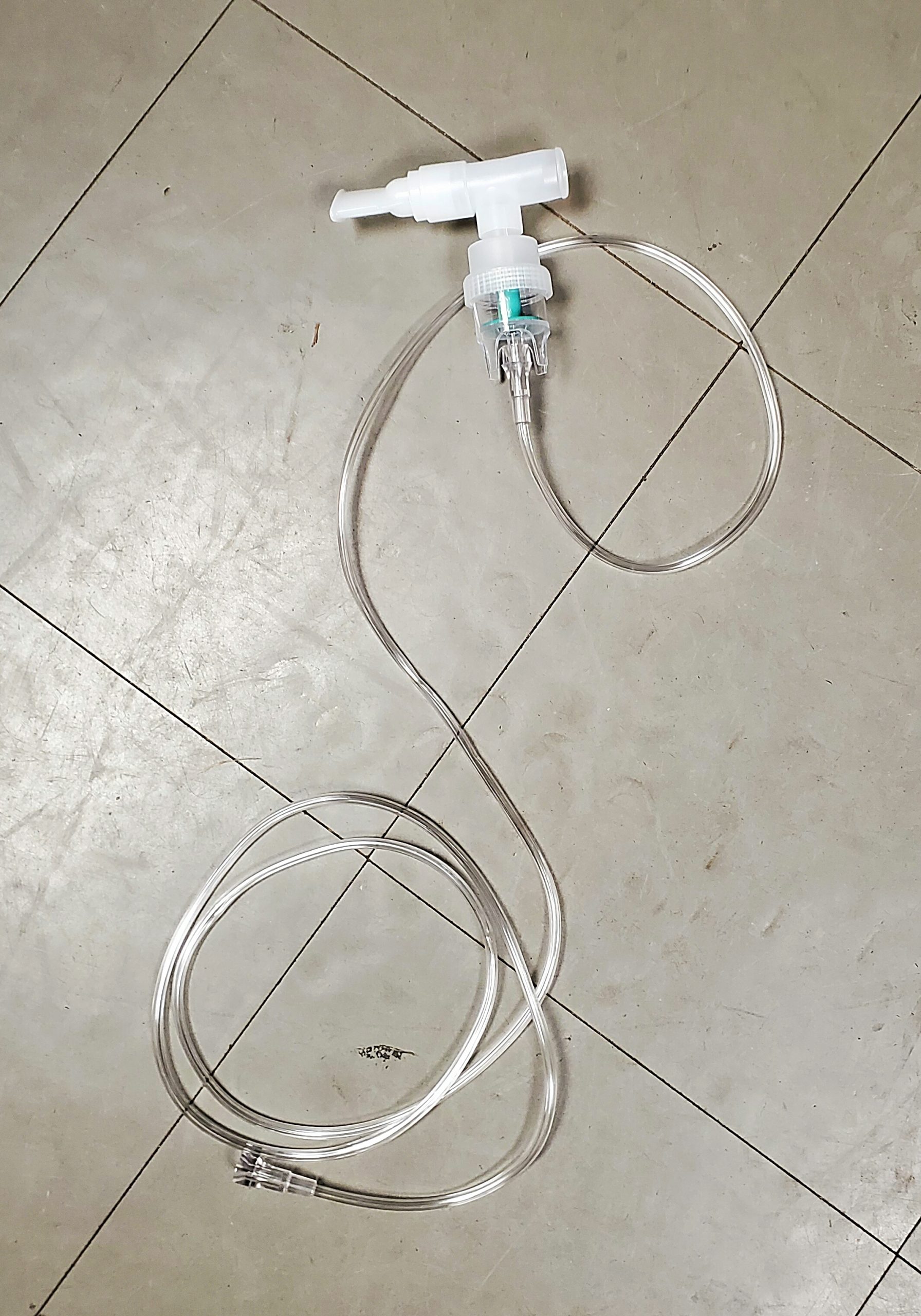
I had just become a paramedic and started working in East New York, Brooklyn. We were sent to an “asthma” call, which in those days, before EMTs started carrying nebulizers and albuterol, were assigned to paramedic units. The text stated that the patient would meet us outside.
“Well, that’s considerate,” I thought.
“You’re about to meet Kevin,” said my partner, who had spent years working in East New York and could easily discern from the text certain hallmarks of a ‘Kevin call’.
“He’s special,” he told me dryly, with a smirk on his face.
As noted, Kevin was outside waiting. He was smoking a cigarette and when he saw us turn the corner, he held up his arm in the familiar way New Yorkers do when they hail a cab.
Even if Kevin wasn’t the only white guy in an almost exclusively minority neighborhood, he still would have stuck out. His fondness for bright red track suits, often velour, enabled you to see him from a distance, which was possibly the objective. Apparently, he had a whole closet full of them. His ensemble included a gold chain with a large gold Star of David and a jacket that was zipped open, revealing chest hair like a 70’s porn star. He had a mop of messy, curly brown hair, pot-marked skin, and wore thin metal-framed aviator glasses with those lenses that change in the sunlight. He also had one of those newfangled cell phones, a novelty at the time.
“What took you so long?” he complained. He extinguished his cigarette and walked over to the side door. My partners amused smile provided me no comfort.
Despite appearing comfortable while breathing, I heard some wheezing, so I started to prepare a nebulizer by squeezing a tube of albuterol into the medication chamber, which was the protocol at the time. Before I screwed the device together, Kevin waved his index finger at me.
“Ah ah,” he reprimanded me, “I get two. You must be new.”
I instantly disliked him.
He also directed me to increase the oxygen flow by a few liters per minute, higher than our protocol specified and exceeding the nebulizer device’s design capacity. My partner rolled his eyes and shook his head.
“Come on, Kevin,” he said. “Don’t be giving my partner a hard time.”
“So she is new,” he said to him.
He turned to me and said, “I know because his regular partner is Devon. Or Shawn. Usually Devon. Shawn does a lot of mutuals.”
He turned back to my partner, who was driving that day, “We’ll be going to Methodist.”
Methodist was on the other side of the borough, far outside of our Ten-Minute-Rule. I was annoyed. What kind of taxi BS was this?
“Listen Kevin, you know we need permission to go so far away. Why don’t we go somewhere closer?” asked my partner, being almost apologetic.
“I’m not going to any of these hospitals. The hospitals around here have had enough of me. I’m done fighting with them. It’s time for a new round of nurses and doctors. Maybe I’ll finally get the care I deserve without having to demand it for once, though I’m not hopeful. Do you want me to call on my phone? I’ve got the number saved.”
He opened his fancy brick of a phone and searched through the directory.
As he scrolled down his list of saved numbers, I noted that it was filled, not with random names of possible friends or relatives, but with titles like ‘EMS complaints’, ‘City Law’, ‘Joe Bklyn Boro’, ‘EMS boro command’, ‘Nurses assoc’, ‘Councilwoman Barbara’, ‘NY hosp complaints’, ‘Medicaid complaints’, ‘City complaints’… The few names I did see noted included of many of our commanding officers, most of which were misspelled. He eventually reached our telemetry number and handed the phone to my partner.
“Hi,” said my partner, providing his name and our unit. “I’m calling for a hospital request outside the ten minutes…yes, it’s Kevin…he called you? Himself? That’s a new one…”
“I thought it would speed up the process,” he whispered to me quietly.
Our Ten-Minute Rule is a procedure for patients who don’t want to go to the closest hospital. Patients are generally entitled to go to any appropriate 911 receiving hospital anywhere within ten minutes from the closest hospital to their location, so if the closest hospital is 8 minutes away, they can go 18 minutes away from their present location. If they desire a hospital farther away, we were required to get permission from our telemetry department. It was my experience that almost all requests were granted, except under special circumstances like high volume at the hospital, certain holidays, and gridlock traffic situations.
My partner went through the procedure on the phone and, as expected, telemetry approved his transport. When he got off the phone, he told Kevin that telemetry wanted their number deleted from his phone. Kevin laughed and said it was memorized.
“They can tell you what to do, but they can’t tell me what to do. Don’t worry, when this is over, I’m going to call them and tell them myself.”
My partner asked him not to, and Kevin just nodded, but I had a feeling he was going to call them anyway.
On the long ride to the hospital, I listened to Kevin tell me all about my job. He had amassed a wealth of information as only someone who utilizes 911 way too often could.
Several times he refilled his nebulizer himself before the treatment was up, expertly going into our oxygen bag and knowing exactly where the medication was kept. When we got to the hospital, he informed me that I’d have to “restock”, as we were now “below par”.
He was well-versed in all of the lingo associated with our job. “Special” wasn’t the word I’d use to describe him.
Kevin soon became one of my regulars as well, regardless of what unit I worked. Everyone in our area knew him well, and they all had varying opinions of him. I heard stories about him making complaints about a responding crew to our complaint department while he was still in their ambulance. There were many stories about disputes he had with his neighbors, who also had varying opinions of him. Some crews enjoyed hearing his banter, and it was true, he did grow on you once you got past his demanding personality.
But his obnoxious ways never endeared him to the hospital nurses as he made his way through every Brooklyn facility and even some in the other boroughs. He continued to get evicted for rude behavior or arguing over the rules of the ER.
“Eventually, he rotates back,” they all told me, when he feels the staff may have forgotten him.
Most people, including myself, eventually adapted to his quirks, rationalizing that it was easier than arguing, and once you did so, Kevin was almost pleasant. He was especially nice to Devon, who I also worked with on that unit. If it appeared that Devon liked you, Kevin’s opinion of you could change completely.
It was hard not to like Devon. He was friendly, had a great positive attitude under pressure, and sometimes, if you were working with him, he’d take you to meet his grandmother.
Devon’s grandmother lived in the neighborhood. He’d often check up on her during his shift, as it was right in the middle of his assigned area. Devon’s grandmother was a friendly person as well and she knew everything about our job and loved hearing about entertaining jobs and the crazy situations we got into. She would listen to our tales while offering baked goods and coffee.
One day we came to work to hear that Devon’s grandmother had died. It was devastating for all of us at the station since most of us had met her through Devon. Some had been called to her home when she was a patient. Throughout the day we shared the news with our coworkers from other stations, letting them know the hours of the services and location of the funeral home, which was in the neighborhood.
On the first day of viewings, my partner and I drove past the funeral home where Devon’s grandmother’s funeral was being held. It was near one of the hospitals we frequented, and when we got to the ER, we met up with some other crews, where we discussed Devon’s grandmother and the funeral arrangements.
As we waited for stretchers to become available, we spoke about the huge turnout that we had witnessed on the way over with another paramedic crew. We mentioned the viewing hours when, suddenly, one of the curtains for one of the beds was flung open.
Kevin stood there in his hospital gown.
“I thought the hours were 7-10!” he said, dismayed to find that they were 6 pm to 8 pm.
“What are you doing at this hospital?” I asked. “I thought this place was on your ‘Never’ list.”
“It’s close to the funeral home. I came here so I could go to the wake when I got out of here. Now I’m gonna have to leave early,” he said, checking his watch.
I was taken a little aback. Kevin was going to the wake?
“Absolutely,” he said. “Devon is my man.”
Not long after, we drove past the funeral home again to find many people still outside. There were several large groups of men wearing suits and ties and women in their Sunday dresses who had spilled out of the home, some to smoke cigarettes and some appeared to be catching up with others before going inside.
And also standing out there was Kevin, who once again stuck out from a mile away, as he stood there with his bushy hair and glasses, wearing a hospital gown with no pants, and holding a nebulizer with its long tubing trailing behind him.
Recent Comments